
















Table of Contents
Introduction
The portable energy storage industry is moving through a strange phase right now.
On one side, buyers are demanding lighter products, higher energy density, faster charging, and longer runtime. On the other side, OEM factories are still dealing with very practical manufacturing realities: thermal management, cell consistency, cycle stability, assembly efficiency, and field reliability.
That tension is exactly why conversations around semi-solid batteries, LiFePO4 battery systems, and “using cell” strategies have become much more important in portable power manufacturing.
From the outside, many battery products still look similar. Similar capacities. Similar output specifications. Similar marketing language. But internally, the engineering logic and production philosophy can be completely different.
And for OEM buyers, distributors, and outdoor energy brands, those differences eventually show up in the form of product lifespan, warranty rates, transportation risks, thermal behavior, and long-term customer satisfaction.
As someone responsible for production coordination and battery system workflow management, I’ve seen how small manufacturing decisions create very large consequences later in the product lifecycle.
Especially in portable power products, reliability is rarely determined by one component alone. It’s the interaction between cells, pack structure, thermal spacing, BMS calibration, assembly consistency, and usage environment that ultimately defines product quality.
Why Semi-Solid Batteries Are Getting So Much Attention
A lot of buyers are now asking about semi-solid batteries. Some are genuinely interested in the technology. Others are mostly responding to market trends.
But from a manufacturing standpoint, semi-solid battery systems are attractive for a very specific reason: they offer a middle ground between traditional lithium-ion architecture and fully solid-state battery concepts.
That’s important because fully solid-state battery production still faces scalability and cost challenges. Semi-solid systems, meanwhile, can improve energy density and safety characteristics while remaining more commercially practical for current manufacturing environments.
In portable energy systems, especially compact outdoor power devices, energy density matters.
Users want smaller products with longer runtime. That pressure affects nearly every stage of product design.
But increasing energy density creates thermal challenges as well. That’s where semi-solid battery development becomes operationally interesting.
In theory, semi-solid electrolyte structures can improve stability while allowing more compact energy storage layouts.
Now, in reality, implementation is not always simple.
Manufacturing consistency becomes more sensitive. Material handling standards become stricter. Environmental controls during production also become more important.
A lot of people underestimate that part.
The battery industry tends to focus heavily on chemistry announcements, but scaling manufacturing reliably is usually the harder problem.
Why “Using Cell” Strategy Matters More Than Capacity Numbers
One of the biggest misunderstandings in portable power manufacturing is the assumption that battery capacity alone determines product quality.
Internally, production teams look at battery systems very differently.
Cell sourcing strategy—or what many factories call the “using cell” decision—is often more important than the advertised capacity itself.
Because not all cells behave the same under stress.
Two products may both claim similar watt-hour ratings, but long-term performance can diverge significantly depending on internal resistance consistency, thermal stability, cycle degradation behavior, and voltage balance performance across the pack.
That’s especially true in outdoor applications.
Portable power stations are used in tents, vehicles, fishing environments, direct sunlight, humid conditions, and long-duration charging cycles. The battery pack experiences constant environmental variability.
Low-grade cells often begin showing inconsistency after repeated cycles.
Sometimes it starts with runtime fluctuations. Sometimes thermal imbalance increases. In worse cases, weak cells force the BMS to compensate constantly, which affects overall system efficiency.
For OEM projects, that becomes a very serious issue because field failures scale quickly once products enter larger distribution channels.
This is why experienced production teams spend a significant amount of time on cell matching, incoming inspection, aging tests, and pack balancing procedures before final assembly even begins.
Again, consistency is usually the real challenge—not simply achieving high specifications on paper.
Semi-Solid Batteries vs LiFePO4 Batteries: Why the Industry Is Still Evaluating Both Carefully
One thing many OEM buyers ask now is whether semi-solid batteries will eventually replace LiFePO4 battery systems in portable power applications.
The short answer is: not completely. At least not yet.
From a production management perspective, both battery systems solve different problems, and each comes with tradeoffs that affect manufacturing, reliability, transportation, thermal behavior, and product positioning.
Semi-solid batteries are attracting attention because they can potentially improve energy density while reducing some safety limitations associated with traditional lithium systems. That makes them attractive for lightweight portable electronics and applications where compact size is critical.
But in real-world portable power manufacturing, especially for outdoor DC energy systems, stability and consistency still matter more than theoretical density advantages in many scenarios.
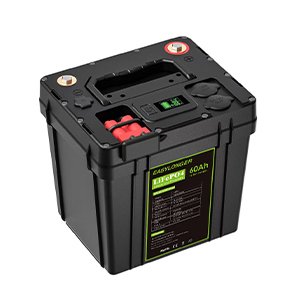
That’s one reason LiFePO4 battery systems remain dominant in camping power stations, mobile energy storage products, and outdoor backup systems.
Especially in high-cycle applications, predictable thermal behavior is often more valuable operationally than simply reducing product weight.
Below is a simplified comparison many OEM buyers use during early-stage product planning discussions.
| Factor | Semi-Solid Battery | LiFePO4 Battery |
|---|---|---|
| Energy Density | Higher | Moderate |
| Weight | Lighter for same capacity | Heavier |
| Thermal Stability | Improved vs traditional lithium-ion, but varies by implementation | Very stable |
| Cycle Life | Developing / varies by supplier | Typically very long |
| Safety Margin | Better than conventional lithium-ion | Excellent |
| Manufacturing Complexity | Higher | Mature and stable |
| Cost Stability | Still evolving | More predictable |
| Production Scalability | Improving but inconsistent across suppliers | Highly scalable |
| Outdoor Heat Tolerance | Depends heavily on pack design | Generally strong |
| Suitability for Portable Power Stations | Promising for compact lightweight systems | Widely used for long-runtime outdoor systems |
| OEM Supply Chain Maturity | Still developing | Very mature |
| Field Reliability History | Limited long-term field data | Proven across many industries |
Again, the decision is rarely just about chemistry.
For experienced production teams, the real discussion usually becomes:
What kind of user environment will this product operate in?
How important is cycle life?
How sensitive is the project to thermal risk?
Is lightweight portability more important than long-term stability?
What level of warranty exposure is acceptable?
Can the supply chain maintain consistency at scale?
Those questions matter much more than simply following battery trends.
For many outdoor portable power products, especially DC-focused systems designed for camping, mobile refrigeration, vehicle applications, and off-grid energy use, LiFePO4 still provides a very practical balance between reliability, safety, and manufacturing consistency.
At the same time, semi-solid battery development is moving quickly, and we’re likely going to see more hybrid market segmentation over the next few years. Smaller high-density mobile products may adopt semi-solid systems faster, while long-cycle outdoor power platforms may continue relying heavily on LiFePO4 architecture for stability and operational predictability.
Why LiFePO4 Battery Systems Remain Important for Portable Power
Even with newer battery technologies entering the market, LiFePO4 battery systems still play a major role in portable power manufacturing.
And honestly, there are practical reasons for that.
From a production management perspective, LiFePO4 chemistry offers a very balanced combination of thermal stability, cycle life, and operational predictability.
Yes, the cells are generally larger and heavier compared to higher-density lithium chemistries. That tradeoff is real.
But for portable power systems designed for outdoor reliability, long-duration DC output, and repeated charging cycles, LiFePO4 still solves many problems efficiently.
The chemistry tolerates repeated cycling well. Thermal behavior is relatively stable. Safety margins are easier to manage in high-volume manufacturing environments.
For OEM buyers, this matters because warranty risk and long-term consistency affect profitability just as much as performance specifications.
A product that looks attractive during initial sales but develops reliability problems six months later becomes very expensive operationally.
That’s one reason many outdoor power systems, vehicle-integrated battery packs, and mobile energy storage products still rely heavily on LiFePO4 architecture.
The chemistry may not always produce the smallest product dimensions, but it often produces more predictable long-term performance in real usage environments.
The Manufacturing Reality Behind Portable Power Reliability
A lot of portable power discussions online focus on outputs, charging speed, or appearance.
Inside production environments, the focus is very different.
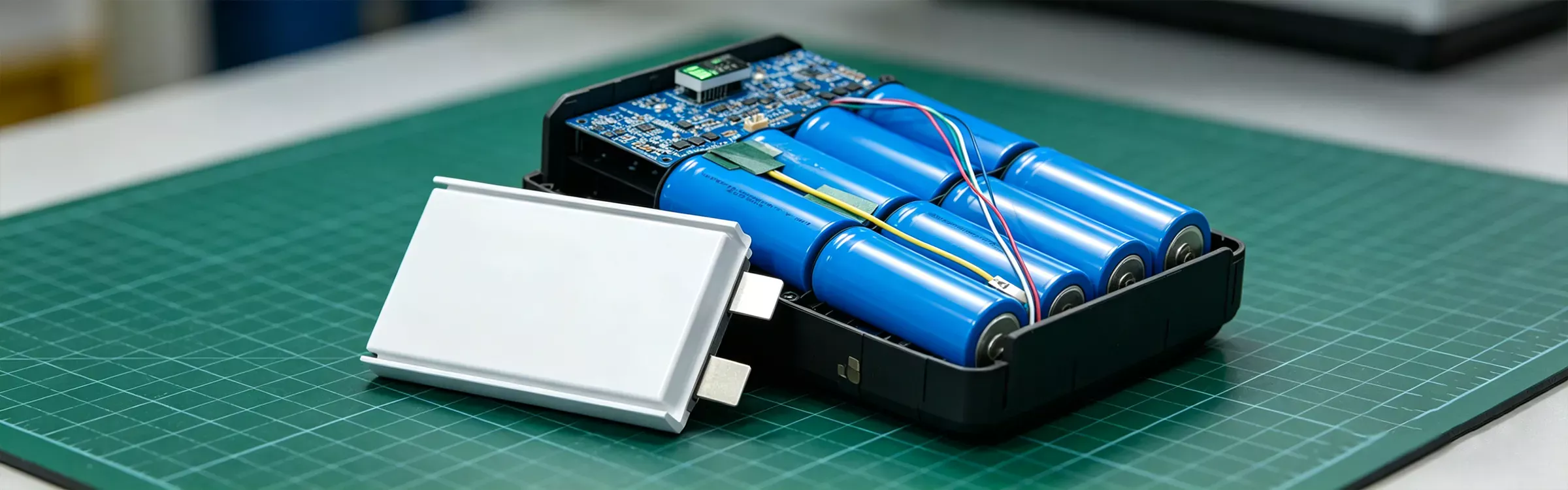
We spend much more time discussing welding consistency, thermal spacing, vibration resistance, connector stability, cable routing, and BMS communication logic.
Because those are the things that usually determine whether a product survives long-term field use.
Spot welding, for example, sounds simple. But inconsistent welding pressure or resistance can gradually create heat accumulation points inside the pack.
Cable routing also matters more than people assume.
In portable systems, products experience movement constantly. Vehicle transport, outdoor handling, temperature expansion, repeated vibration. Poor internal cable management eventually creates wear points.
Even enclosure pressure distribution matters.
A housing that looks visually compact may actually create long-term thermal problems if airflow spacing becomes too restricted internally.
Again, portable power manufacturing is really about system balance.
Every design decision creates tradeoffs somewhere else.
Why OEM Buyers Are Paying More Attention to Production Workflow
Over the last few years, OEM buyers have become much more technical during factory evaluations.
Previously, many sourcing decisions focused heavily on price and specifications.
Now buyers ask about incoming QC systems, cell traceability, aging procedures, cycle testing, thermal validation, and production consistency across batches.
That shift makes sense.
Portable power systems are increasingly used for longer-duration outdoor applications, off-grid setups, vehicle systems, and mobile work environments. Reliability expectations are higher now.
In many cases, buyers are no longer purchasing simple consumer electronics. They’re sourcing mobile energy infrastructure products.
That changes the evaluation process completely.
Factories that understand process control usually approach production differently.
Instead of optimizing only for assembly speed, they focus on repeatability. Stable assembly standards. Controlled testing procedures. Thermal inspection workflows. Long-term pack behavior.
Those systems are less visible from the outside, but they usually determine whether products remain reliable after thousands of units enter the field.
How Product Design Logic Is Changing in Outdoor Energy Systems
One noticeable trend is the shift toward DC-centered outdoor energy ecosystems.
Modern portable devices increasingly rely on USB-C, vehicle-powered systems, Anderson interfaces, and low-loss DC architectures.
That changes how portable power products are designed internally.
Instead of focusing purely on high-load appliance scenarios, many manufacturers are optimizing around runtime efficiency, thermal stability, and continuous DC output performance.
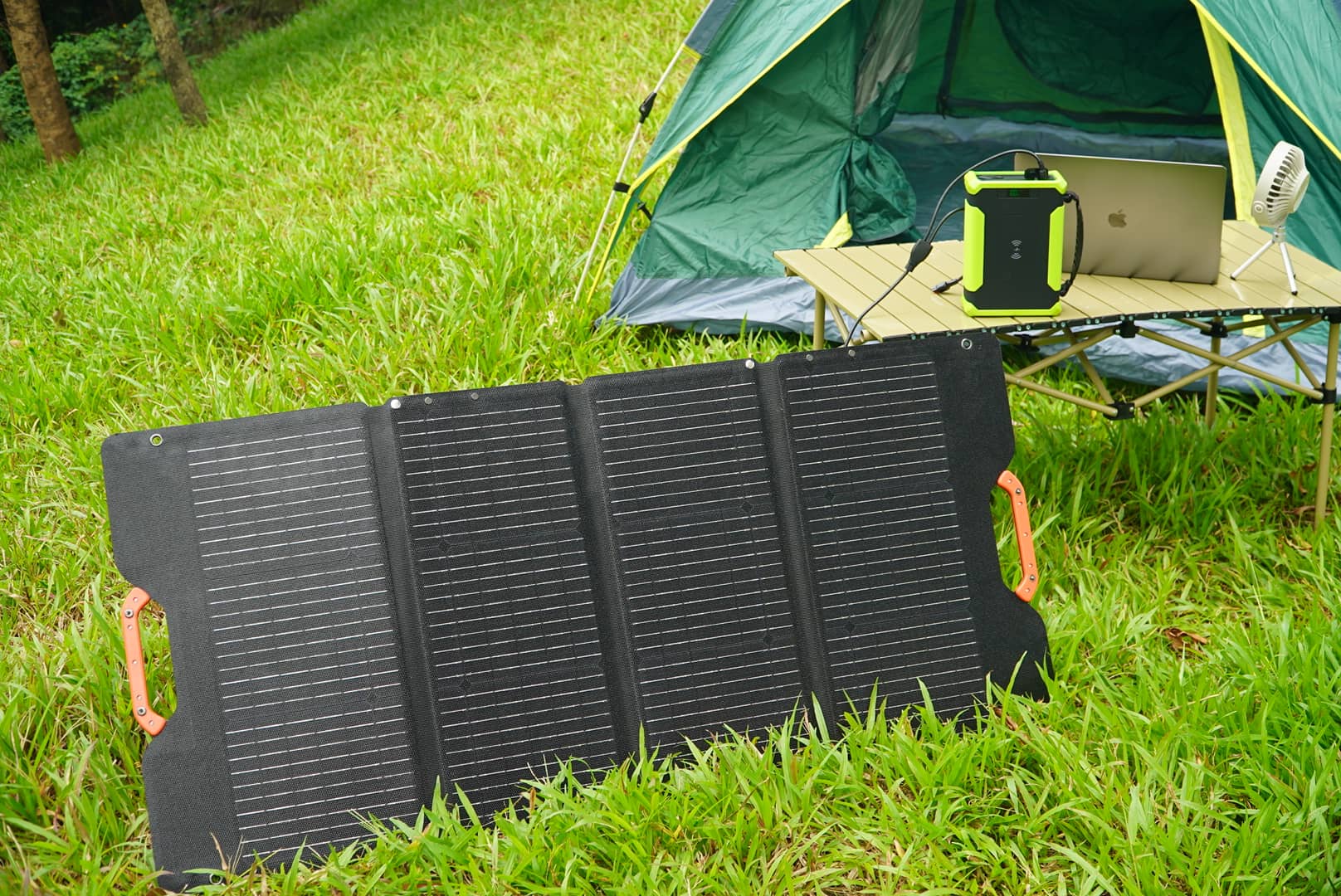
Products like the Merpower portable power series reflect this shift quite clearly.
Rather than overcomplicating the system architecture, the design focuses on stable DC delivery for outdoor applications such as portable refrigeration, camping equipment, communication devices, lighting systems, and mobile electronics.
From a production perspective, this approach also improves thermal management efficiency and reduces unnecessary conversion complexity inside the system.
For many OEM buyers, especially in outdoor and mobile energy sectors, that operational simplicity is becoming increasingly valuable.
Why Scalability and Process Discipline Matter in OEM Manufacturing
Building one functional prototype is relatively easy today.
Scaling consistent production is much harder.
As production volume increases, small inconsistencies become magnified.
Cell variation. Solder quality. Connector tolerances. BMS calibration drift. Thermal assembly precision. These variables compound over time.
That’s why disciplined workflow management becomes critical in battery manufacturing environments.
Reliable OEM manufacturing usually depends less on aggressive product claims and more on stable process execution over long production cycles.
Factories that survive long-term in this industry typically invest heavily in process refinement, production verification, and failure prevention systems.
Because in portable energy products, reliability problems rarely appear immediately.
They show up later—after transportation, repeated charging cycles, seasonal temperature changes, or extended outdoor use.
And by then, operational costs become much more difficult to control.
Conclusion
The portable power industry is evolving quickly, but the core manufacturing challenges remain surprisingly consistent.
Cell quality, thermal management, pack consistency, BMS behavior, and production discipline still determine whether a battery system performs reliably outside the factory environment.
Technologies like semi-solid batteries may improve energy density and future design flexibility, while LiFePO4 battery systems continue offering practical advantages for long-cycle outdoor applications.
But regardless of chemistry trends, experienced OEM buyers increasingly understand that long-term reliability comes from manufacturing execution—not specification sheets alone.
And in portable energy systems, especially large power bank and outdoor DC applications, that operational difference becomes visible very quickly once products reach real users in the field.