

















Table of Contents
As portable power becomes essential for outdoor adventures, travel, and emergency backup, more users are searching for one key term: power bank outlet. But what does a “power bank outlet” actually mean? Is it the same as a wall socket? And which type of outlet—USB, DC, or AC—is right for your needs?
This guide explains everything you need to know about power bank outlets, how they work, and how to choose the right one for your devices.
Quick Answer: What Is a Power Bank Outlet?
A power bank outlet refers to the output interface on a power bank that delivers electricity to devices.
Unlike standard USB-only power banks, power bank outlets may include USB ports, DC outputs (12V/24V), or AC outlets, allowing them to power a wider range of electronics beyond smartphones.
In simple terms:
A power bank outlet is how power leaves the battery and reaches your device.
Why Do People Search for “Power Bank Outlet”?
Most users searching this term are not just looking to charge a phone. They usually want to:
Power devices directly, not just recharge batteries
Replace wall outlets in outdoor or mobile environments
Run equipment like:
Portable fridges
CPAP machines
LED lighting
Dashcams
Heated clothing
Cameras and laptops
This search intent is strongly tied to camping, fishing, overlanding, travel, and emergency preparedness.
The Three Main Types of Power Bank Outlets Explained
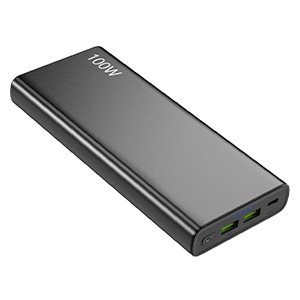
1. USB Output (USB-A & USB-C)
USB is the most common power bank outlet type.
Typical features
Voltage: 5V (standard), higher with USB-C PD
Power: 10W–100W (USB-C PD)
Compact and efficient
Best for
Smartphones
Tablets
Cameras
Laptops (USB-C PD models)
Limitations
Cannot directly power most 12V or 24V appliances
Limited for long-runtime devices
2. DC Outlet (12V / 24V DC Output)
A DC power bank outlet delivers electricity directly in DC form—exactly how many outdoor and vehicle devices operate.
Common formats include:
DC barrel ports
Cigarette lighter sockets (12V car outlet)
Best for
Portable fridges
CPAP machines (with DC cable)
LED camping lights
Dashcams
Routers
Heated gear
Why DC outlets matter
Higher efficiency (no inverter loss)
More stable power
Safer for outdoor use
Smaller and lighter than AC systems
This is why DC outlets are becoming increasingly popular in modern outdoor power banks.
3. AC Outlet (Inverter-Based)
AC outlets simulate a household wall socket by converting DC battery power into AC electricity.
Advantages
Can power traditional AC appliances
Works with original chargers
Drawbacks
Energy loss from DC-to-AC conversion
Larger size and weight
More heat generation
Not ideal for long runtimes
AC outlets are useful when DC alternatives are unavailable, but they are not always the most efficient choice.
DC vs AC vs USB: Power Bank Outlet Comparison
| Feature | USB Outlet | DC Outlet | AC Outlet |
|---|---|---|---|
| Efficiency | High | Very High | Medium |
| Size Impact | Minimal | Low | High |
| Best For | Electronics | Appliances & gear | Household devices |
| Energy Loss | Low | Very Low | High |
| Outdoor Safety | High | Very High | Moderate |
For outdoor and mobile use, DC outlets often offer the best balance of efficiency, safety, and portability.
What Can You Power with a Power Bank Outlet?
Portable Fridge
Typical draw: 40–60W (12V DC)
Best outlet: DC outlet
Runtime depends on battery capacity
CPAP Machine
Most models support DC input
Best outlet: DC outlet (12V or 24V)
No inverter required = longer runtime
LED Lighting
Power draw: 5–30W
Best outlet: USB or DC
Dashcam / Router
Continuous low power
Best outlet: DC or USB
Heated Clothing
Usually 12V DC
Best outlet: DC
Why DC Outlets Are the Future of Outdoor Power Banks
More devices today operate internally on DC power. Using a DC outlet avoids unnecessary energy conversion, which means:
Longer runtime
Lower heat
Higher reliability
Smaller power banks
This shift is why many outdoor-focused power banks now emphasize 12V and 24V DC outputs instead of AC.
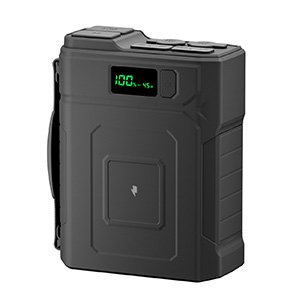
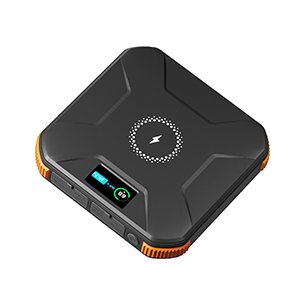
Real-World Example: Power Bank Outlets in Merpower GP Series
Modern outdoor power banks often combine multiple outlet types for versatility.
Merpower GP16
Compact and lightweight
USB-C + DC outputs
Ideal for travel, cameras, and light gear
Merpower GP20
Built-in 12V cigarette lighter outlet
Designed for camping and fishing
Excellent for fridges, lighting, and mobile setups
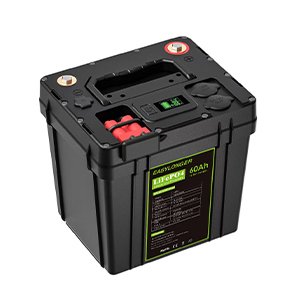
Merpower GP50
High-capacity LiFePO4 battery
Multiple DC voltage outputs
Suitable for extended outdoor trips and emergency backup
These products focus on DC power delivery, prioritizing efficiency and safety over unnecessary AC conversion.
How to Choose the Right Power Bank Outlet
Check device voltage
USB devices → USB outlet
12V appliances → DC outlet
AC-only devices → AC outlet
Confirm power requirements
Match wattage needs with output capacity
Estimate runtime
Battery Wh ÷ device W = approximate hours
Consider portability
Larger batteries = longer runtime but more weight
Common Questions About Power Bank Outlets
Is a power bank outlet the same as a wall outlet?
No. A wall outlet provides AC power from the grid. A power bank outlet delivers battery-stored DC power, sometimes converted to AC.
Is DC safer than AC outdoors?
Yes. DC power has lower shock risk and better efficiency.
Can a power bank outlet run devices overnight?
Yes, if battery capacity is sufficient and DC power is used efficiently.
Do I need an inverter?
Only if your device requires AC power and has no DC option.
Conclusion: Understanding Power Bank Outlets Helps You Choose Smarter
A power bank outlet is more than just a port—it defines what devices you can power, how efficiently, and for how long.
For outdoor, mobile, and emergency use:
USB outlets handle electronics
DC outlets power appliances efficiently
AC outlets are optional, not always necessary
Choosing the right outlet type ensures better performance, longer runtime, and a safer power experience wherever you go.