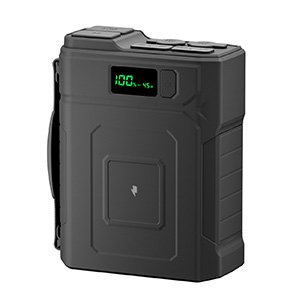
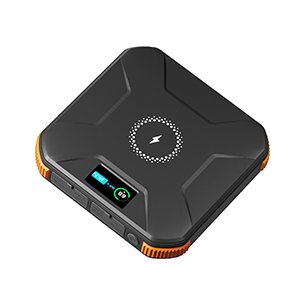
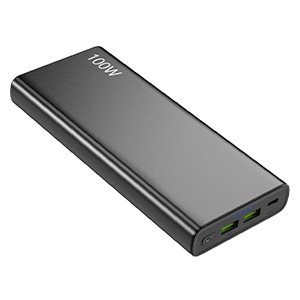
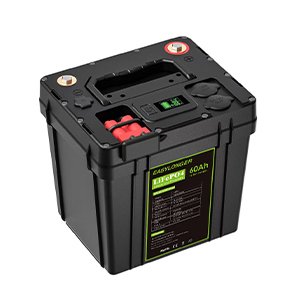
Hot days change the way people use electronics.When families head to the pool, or friends spend a weekend at the beach, the phone stays out longer, the speaker plays music all afternoon, the camera records more video, and no one wants a dead battery when it matters most. In that kind of setting, a portable power station becomes less of a “backup product” and more of a practical part of the day.The key question is simple: which devices can it actually support?
1. Why poolside and beach days need portable power
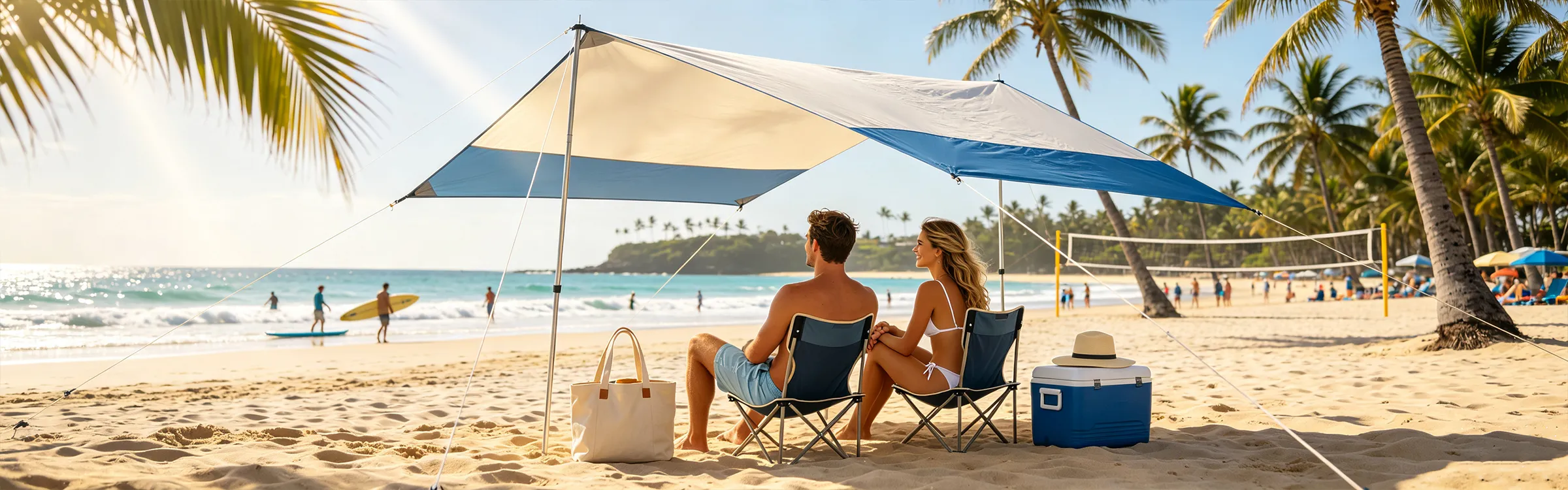
Poolside and beach outings seem relaxed, but they are actually battery-heavy situations.People use more electronics because they are outside longer, take more photos, stream more music, and rely on phones for navigation, communication, and entertainment. At the same time, heat drains batteries faster, and direct sunlight makes charging less convenient.That is why portable power is useful here. It reduces battery anxiety and lets people keep using the devices they already depend on.For this kind of outing, the best power setup is not about running big appliances. It is about keeping small and medium electronics alive all day.
2. Which devices are most commonly used at the pool or beach?
The most practical devices in this scenario are usually the ones people carry every day.
Phones
Phones are the most important device. People use them for photos, maps, messages, videos, and emergency contact.
Bluetooth speakers
Music is one of the biggest reasons people bring power outdoors. A speaker is low-power but high-value in this kind of social setting.
Smartwatches and earbuds
These are small devices, but they still need charging during long outings.
Action cameras
GoPro-style cameras and similar devices are popular for beach sports, swimming trips, and family activities.
Tablets
Tablets are useful for children, reading, streaming, or light entertainment during long breaks.
Small accessories
LED lights, portable fans, camera battery chargers, and other low-power accessories are also common.
3. Which devices can a portable power station support safely?
The answer depends on output type, wattage, and how long the device needs to run.
USB-C PD devices
This is the most useful category for modern users. Phones, tablets, earbuds, and some cameras can charge through USB-C PD very efficiently.
USB-A devices
Smartwatches, earbuds, small fans, and basic accessories still use USB-A, and a portable power station with stable USB-A output can handle them easily.
DC-powered devices
Some small speakers, cameras, lights, and chargers work well through DC output. This is often more efficient than using an inverter for simple outdoor electronics.
Higher-demand items
Small fridges, portable coolers, or projectors can still work, but only if the power station has enough capacity and the correct output specification. These devices need more planning.
4. What should buyers check before using a portable power station outdoors?
This is where many people make mistakes.A power station may look powerful on paper, but the real question is whether it fits the actual use case.
Output compatibility
Check whether the device supports USB-C PD, USB-A, DC, or car-style output.
Power demand
A phone may only need a small amount of power. A cooler or projector needs much more. Know the difference before choosing.
Heat and sunlight
Outdoor use means higher temperature, and batteries always perform better when they are kept reasonably cool and shaded.
Portability
For poolside and beach use, weight matters. A unit that is too heavy becomes inconvenient very quickly.
Safety
Sand, moisture, and accidental splashes are part of the environment. The power station should be placed carefully and used responsibly.
5. Original comparison table: which devices fit best?
Device
Typical Use at Pool/Beach
Power Demand
Portable Power Station Fit
Smartphone
Photos, messages, navigation
Low
Excellent
Bluetooth speaker
Music and social use
Low
Excellent
Smartwatch / earbuds
Personal use
Very low
Excellent
Action camera
Video recording
Low
Excellent
Tablet
Reading, videos, kids’ entertainment
Low to medium
Very good
Portable projector
Movie night
Medium
Depends on capacity
Small cooler / mini fridge
Drinks and food
Medium to high
Depends on output
LED light / camping lamp
Evening lighting
Low
Excellent
This is the practical answer: most everyday poolside and beach devices are a very good match for a portable power station. The bigger challenge is usually not compatibility, but runtime.
6. Why some devices are a better fit than others
Portable power works best when the load is light and predictable.Phones, cameras, speakers, and earbuds are ideal because they use low power and benefit immediately from a stable charging source. That makes them easy to support and easy to plan around.High-wattage appliances are a different story. They may work, but they reduce runtime quickly and require more careful sizing. That is why this kind of product should be positioned as an outdoor convenience tool, not as a replacement for household power.For a pool or beach day, the goal is not to run everything. The goal is to keep the important electronics available, charged, and ready.
7. Why a compact outdoor power station makes sense here
For this use case, a compact and reliable power station is usually the best choice.You want:
enough capacity for a full day
stable output for USB and DC devices
easy carrying and placement
safe battery chemistry for repeated outdoor use
simple operation for family or group outings
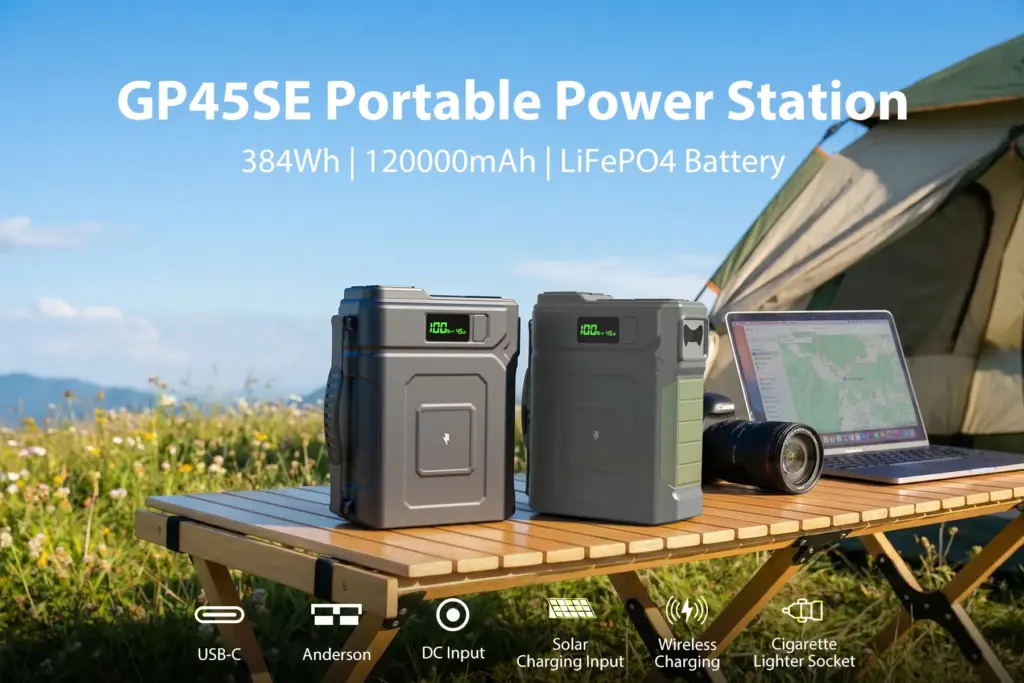
A model like GP45SE fits this kind of scenario naturally because it is positioned for outdoor use, portable convenience, and practical device support. It is not about powering everything. It is about powering the right things well.That is the right mindset for poolside and beach days.
8. Conclusion: the best portable power setup is the one matched to the day
Pool and beach days are not high-power scenarios. They are convenience scenarios.The most useful devices are the ones people already carry: phones, speakers, earbuds, watches, cameras, tablets, and a few small outdoor accessories. A portable power station is valuable because it keeps those devices running without stress.So the real question is not “Can it power everything?”
The better question is: Can it support the devices people actually use in this setting, safely and comfortably?For poolside and beach days, the answer is yes — if the output, capacity, and device mix are chosen correctly.