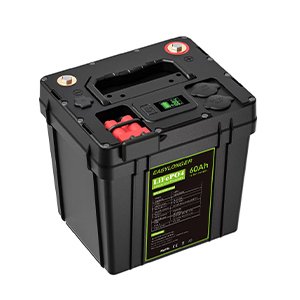
A 50Ah LiFePO4 battery pack can be a useful starting point for camping, vehicle accessories, fishing electronics, and small DC power systems. But the capacity printed on the label does not answer every practical question.Will it start your equipment? Does it have the right connector? How long will it run a refrigerator? Can it charge your phone while powering another device?These details determine whether a battery is convenient and suitable for your setup.Start by understanding your equipment, then compare capacity, output capability, connections, and charging options. If your estimated demand leaves little reserve, a larger pack may be worth considering.The Merpower LB50 is one such option. Despite its model name, the configuration discussed in this article is a
12.8V, 60Ah LiFePO4 battery pack with 768Wh of nominal energy. It provides additional capacity and several connection options for compatible equipment.
Understand What 50Ah Means for Your Equipment
Amp-hours describe battery capacity at a stated voltage. They do not directly describe maximum power or guaranteed runtime.
Compare Energy at the Same Voltage
For batteries with different voltages, watt-hours provide a clearer energy comparison.The calculation is:
Nominal energy in Wh = Nominal voltage × Capacity in AhA 12.8V, 50Ah LiFePO4 battery therefore has:
12.8V × 50Ah = 640WhThe LB50 has:
12.8V × 60Ah = 768WhThese are nominal energy figures. The amount delivered to equipment depends on operating conditions, output losses, and the point at which the battery or connected device stops operating.Also check voltage when comparing listings. A 50Ah battery at one voltage does not contain the same energy as a 50Ah battery at a different voltage.
Separate Capacity From Current
The terms 50Ah and 50A describe different things.
- Ah describes capacity.
- A describes current.
- Wh describes energy.
- W describes power.
A battery can store enough energy for several hours of operation but still be unable to supply a device’s required current.This matters particularly for refrigerators, pumps, motors, and inverters. Their startup demand may exceed their normal operating demand.
Begin With the Connected Device
Before choosing a battery, identify:
- Input-voltage requirements
- Normal power or current
- Startup demand
- Connector and polarity
- Expected operating time
- Other equipment sharing the supply
These details are more useful than selecting a battery by capacity alone.
Estimate Runtime Around the Way You Use Power
A runtime calculation should begin with the equipment’s average consumption.The basic relationship is:
Estimated runtime = Usable battery energy ÷ Average device powerFor example, a device drawing 40W for six hours needs approximately:
40W × 6 hours = 240WhThe battery must supply that energy while also covering relevant losses and retaining an appropriate reserve.
Use Different Approaches for Different Loads
An LED light usually has a relatively straightforward power requirement. Phone charging changes as the phone fills. A refrigerator cycles on and off, with consumption affected by temperature and use.
| Equipment | Consumption pattern | What to consider |
|---|
| LED lighting | Relatively steady | Power and operating hours |
| Phone or camera charging | Changes during charging | Energy needed and charging frequency |
| Car refrigerator | Intermittent compressor operation | Ambient temperature, settings, and daily consumption |
| Small pump | Variable or intermittent | Startup current and operating time |
| Motor-driven equipment | Changes with load | Current demand throughout use |
For refrigeration, a measured daily energy figure under representative conditions is more useful than multiplying the compressor’s running power by 24 hours.
Leave a Practical Reserve
A battery sized exactly to an ideal calculation leaves little room for changes.Consider whether you might:
- Stay longer than planned
- Add another light or charging device
- Encounter colder conditions
- Miss a planned charging opportunity
- Need additional communication power
A reserve should reflect the application. A short picnic and a remote overnight trip do not have the same consequences if power runs out.
Test Before Depending on the Result
Connect the real equipment before departure or installation. Check startup, sustained operation, cables, and the combination of devices you expect to use.A short test confirms that equipment turns on. A longer test helps establish whether the planned operating time is realistic.
Choose Connections That Suit the Equipment
Connections influence both installation and everyday convenience.A battery with only terminals may suit a fixed installation. A pack with plug-in DC and USB outputs may be easier to share among several portable devices.
Terminals and Plug-In Ports Serve Different Needs
M8 terminals allow suitable cable connections for a properly designed installation. Anderson connectors provide a removable connection when the connector, cable, and electrical requirements match.A cigar-lighter socket can accommodate compatible vehicle accessories, while USB ports support suitable phones, tablets, cameras, and other electronics.A greater number of ports does not automatically mean more total output. Shared circuits and operating restrictions still apply.
Check the Whole Connection
The complete power path includes the battery, connector, cable, protective devices, any converter, and the equipment.Check:
- Voltage compatibility
- Correct polarity
- Cable current capability
- Connector condition
- Appropriate fuse protection
- Secure installation
- Startup and continuous demand
A plug that fits can still have the wrong voltage or polarity.Likewise, “12V” identifies a system category rather than proving that every device will accept the battery’s actual output throughout discharge. Confirm the permitted range for equipment requiring tightly regulated power.
When Moving From 50Ah to 60Ah Makes Sense
If a 50Ah solution comfortably meets the application, extra capacity may be unnecessary. If it leaves little reserve, moving to 60Ah can provide additional planning flexibility.
Compare Capacity on the Same Basis
| Specification | 12.8V, 50Ah battery | Merpower LB50 |
|---|
| Nominal voltage | 12.8V | 12.8V |
| Rated capacity | 50Ah | 60Ah |
| Nominal energy | 640Wh | 768Wh |
| Additional nominal energy | — | 128Wh |
At the same nominal voltage, 60Ah provides
20% more nominal energy than 50Ah.That does not guarantee 20% longer runtime in every installation. Output efficiency, operating limits, temperature, and device behavior can affect the comparison.
Consider the Complete Trade-Off
Additional capacity may be useful for:
- Longer stops between charging opportunities
- Shared camp lighting and electronics
- More camera or phone charging
- A refrigerator operating alongside other equipment
- Projects where the original energy estimate leaves little margin
Balance those benefits against installation space, carrying requirements, and budget.The right choice is the pack that supports the task with a reasonable reserve.
Put the LB50 Into a Practical Outdoor Setup
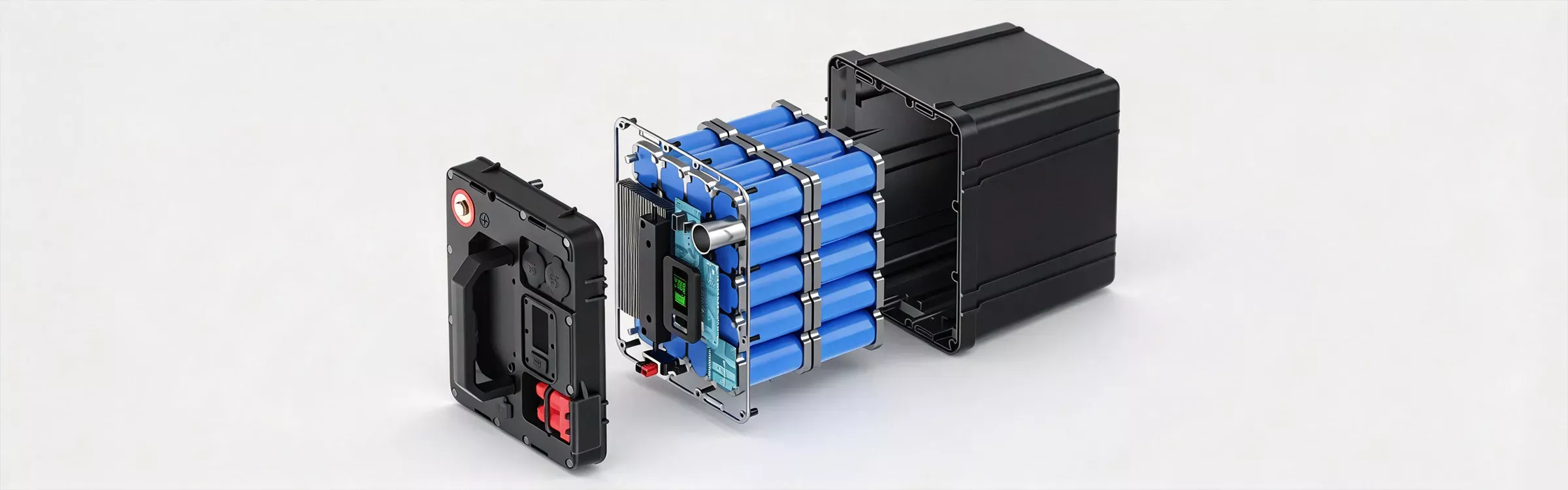
The Merpower LB50 combines a 32700 LiFePO4 cell format with a rated pack capacity of 12.8V and 60Ah.Its connections support different equipment categories.
| LB50 connection | Published specification |
|---|
| M8 terminal output | 12V / 60A |
| Big Anderson output | 12V / 60A |
| Cigar-lighter output | 12V / 10A |
| USB-A output | 5V/3A, 9V/2A, 12V/1.5A |
| USB-C output | 5V/3A, 9V/3A, 12V/2.5A |
| M8 terminal charging input | 14.6V / 30A |
| Big Anderson charging input | 14.6V / 30A |
| Small Anderson solar input | 12–24V / 4.2A, with MPPT support |
Charge Travel Electronics
Phones, tablets, cameras, and compatible charging accessories can use the USB connections.
USB-A and USB-C share charging circuitry. When used together, both operate at 5V rather than their individual fast-charging settings.Plan around this behavior when several people need to recharge equipment. Check whether a device requires a particular charging protocol or dedicated charger.
Connect Suitable DC Equipment
Potential applications include compatible camp lighting, car refrigerators, pumps, and other matched DC equipment.
The Big Anderson connector and M8 terminals share one circuit. Their ratings cannot be added together as a 120A output.For demanding loads, confirm the permitted operating combination and startup requirements with Merpower. Avoid treating the port rating as proof that any appliance with a lower calculated wattage will work.Motor applications also require attention to sustained current, starting behavior, wiring, and intended operating time.
Plan Placement and Handling
The manual lists dimensions of
210 × 176.5 × 210mm and a weight of
7.35kg.Check carrying arrangements, mounting space, cable access, and how the pack will be restrained during transport.Keep the display visible enough to inspect operating status. Position cables where they will not be crushed by luggage, caught by moving equipment, or pulled loose.
Select the Charging Method Before Leaving Home
The charging plan determines how conveniently the battery can be reused during a trip.
Use a Suitable LiFePO4 Charger
For the M8 or Big Anderson charging connections, select an approved charger matching the LB50’s requirements. The specified charging current must not exceed 30A.Do not select a charger solely because it is labeled for a 12V battery. Charging voltage, method, connector, and polarity must all be appropriate.Do not assume that multiple charging inputs can be combined to increase charging power.
Match Solar Equipment Electrically
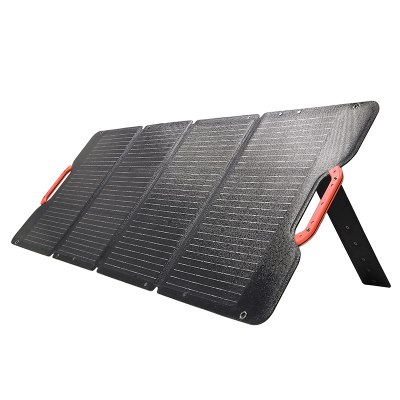
The manual permits a suitable 100W solar panel but specifies a maximum MPPT charging power of 80W. Panel rating and accepted charging power are different figures.Confirm the panel and cable specifications against the input requirements. Rated panel wattage alone does not establish compatibility.Shade, weather, positioning, and available sunlight affect real charging. Avoid planning a trip around continuous rated solar output.
Understand Charging While Running Equipment
The LB50 supports charging while supplying equipment. This does not establish UPS-style uninterrupted transfer.The incoming energy must cover the connected load before it can increase the stored charge. If consumption is greater than incoming power, the battery can continue losing energy.Evaluate the actual charging source and loads together, and test any equipment that is sensitive to interruptions.
Use the Manual to Plan Protection and Maintenance
Outdoor use still requires appropriate handling.
Understand Environmental Protection
The manual states IP65 protection and prohibits immersion. Keep connections dry, particularly while cables are attached.Do not interpret an enclosure rating as permission to leave an operating setup exposed to every combination of water, dirt, and weather.Follow the connection and protective-cover instructions for the supplied product.
Follow the LB50 Storage Routine
For long storage, the manual specifies full charging, storage at 0–40°C, and recharging every six months. These are storage instructions, not operating-temperature ratings.Disconnect unnecessary accessories before storage and check the product for damage before returning it to use.General lithium-battery advice should not override the requirements for a specific product.
Investigate Repeated Shutdowns
A protection event may indicate an excessive load, startup surge, unsuitable temperature, connection problem, or another fault.Disconnect the equipment and investigate before restarting. Repeatedly pressing the power button does not correct the original cause.Stop using the battery if it becomes swollen, damaged, leaking, unusually hot, or produces an abnormal smell.
Confirm the Fit Before Replacing an Existing Battery
A higher-capacity pack is not automatically a direct replacement.Before changing an existing system, ask:
- Does the equipment accept the battery’s actual voltage range?
- Can the battery support normal and startup demand?
- Are the cables, connectors, and fuses appropriate?
- Is the existing charger compatible?
- Does the installation have enough space?
- Can the battery be secured and accessed safely?
- Are the expected environmental conditions suitable?
- Does the project require multiple batteries?
Series and parallel connections require explicit product approval. Do not apply another battery manufacturer’s connection rules to the LB50.For OEM or project purchasing, provide the connected equipment, required runtime, charging source, installation details, and expected environment. Those details make a useful recommendation possible.
Let the Application Decide the Capacity
A 50Ah LiFePO4 battery pack can be a suitable starting point for many DC applications. The final choice should depend on more than the capacity label.Calculate the required energy, check output capability, select suitable connections, and establish how the battery will be recharged.The Merpower LB50 provides a 60Ah, 768Wh option for users evaluating additional capacity and several USB/DC connection choices. Its value depends on how those features match the equipment and daily routine.Before purchasing, confirm the complete setup with Merpower. A clear device list and realistic operating plan are more useful than assuming that a particular capacity will suit every application.
Frequently Asked Questions
How Much Energy Does a 12.8V, 50Ah Battery Store?
Its nominal energy is approximately 640Wh. Actual energy delivered to equipment depends on operating conditions and losses.
Does 50Ah Mean the Battery Can Supply 50A?
No. Capacity and output current are separate specifications. Check the discharge rating and connected equipment’s requirements.
Is the LB50 a 50Ah or 60Ah Battery?
LB50 is the model name. The version described here is rated at 12.8V, 60Ah, and 768Wh.
How Long Will a Battery Run My Equipment?
Divide usable energy by average equipment power, then verify the estimate through realistic testing. Include all connected loads and an appropriate reserve.
Can the LB50 Power a Car Refrigerator?
Yes. The LB50 has a built-in 12V cigar-lighter socket that can power commonly available 12V car refrigerators. Simply connect the refrigerator using its compatible car power cable.The refrigerator’s operating and startup requirements must remain within the socket’s 12V/10A rating, with the connected device rated below 120W. Actual runtime depends on the refrigerator’s energy consumption, temperature setting, and surrounding conditions.
Can It Power a Trolling Motor?
Compatibility requires a complete assessment of motor voltage, sustained and startup current, wiring, operating time, and environmental conditions. Confirm the particular motor and setup with Merpower.
Can I Reuse My Existing Charger?
Only if it matches the battery’s charging requirements and is approved for the intended connection. A compatible-looking plug is insufficient.
Does More Capacity Always Mean a Better Battery?
No. Output capability, connections, charging, installation, handling, and application fit also matter.
Can the LB50 Replace Another 12V Battery Directly?
Possibly, but only after checking the equipment, charging system, wiring, physical installation, and operating requirements.
What Should I Send Merpower Before Choosing a Battery?
Provide the device model, voltage, normal and startup demand, connector, required runtime, charging source, installation conditions, and expected environment.