
















Table of Contents
Introduction
When temperatures drop, camping changes quickly.
The same tent that feels comfortable on a mild autumn evening can become cold and uncomfortable after sunset. Your first instinct may be to search for a tent heater and find the fastest way to warm up the space.
But heating a tent is not quite the same as heating a room.
A tent is a small, enclosed environment made largely from lightweight fabric. There may be limited ventilation, combustible materials nearby, and very little separation between a heating device and your sleeping bag, clothing, or other gear. If the heater uses fuel, there is also the additional concern of combustion gases, including carbon monoxide.
That means the right question is not simply, “Which tent heater gets the hottest?”
A better question is:
“How can I stay warm safely, while using a heating method that matches my camping setup and available power?”
For many campers, the answer is not to heat the entire tent continuously. A combination of insulation, appropriate clothing, a good sleeping system, and low-power personal heating equipment can be more practical.
This guide looks at the main tent-heating options, their limitations, and how DC-powered heating gear can fit into a portable power setup.
Why Tent Heating Requires More Care Than Regular Camping Gear
Most camping equipment has relatively straightforward consequences if it is used incorrectly. A poorly organized storage box is inconvenient. A dead flashlight is frustrating.
A heating device is different.
A heater produces heat intentionally, which means it can also produce very high temperatures. Depending on the technology, it may involve combustion, electrical current, hot surfaces, or a combination of these factors.
Inside a tent, those risks become more important because the space is small.
There are several things to consider:
- The tent fabric and other equipment may be combustible.
- Ventilation may be limited.
- Sleeping campers may not notice changing conditions as quickly.
- Fuel-burning equipment can produce carbon monoxide.
- Electrical heating equipment can draw significant power.
- Moisture and condensation can complicate electrical safety.
- A heater placed too close to bedding or clothing can create a fire hazard.
This is why warmth should start with the person, rather than with the heater.
A properly rated sleeping bag, insulated sleeping pad, warm clothing, and protection from wind can dramatically reduce the amount of additional heating you need.
Think of tent heating as a supplementary system—not a replacement for a proper cold-weather sleeping setup.
Common Tent Heating Options and Their Real Risks
Different heating methods solve the problem in very different ways. Understanding those differences is more useful than simply comparing temperature ratings.
Propane Heaters
Propane heaters are popular because they can produce substantial heat without requiring an electrical power source.
They can be useful in appropriate outdoor or well-ventilated camping environments, particularly when campers need immediate warmth.
But combustion creates an important safety issue: carbon monoxide (CO).
Carbon monoxide is colorless and odorless, so you cannot rely on your senses to detect it. Fuel-burning appliances therefore require appropriate ventilation and careful use.
A heater that works well in an outdoor shelter does not automatically become safe simply because someone moves it inside a tent.
Campers should follow the heater manufacturer’s instructions regarding approved environments and ventilation. Fuel containers and hot surfaces also need to be kept away from combustible materials.
For sleeping, relying on a fuel-burning heater inside an enclosed tent is particularly risky.
Wood Stoves
Wood stoves are a different category.
They are commonly associated with purpose-built hot tents, where the tent has been designed to accommodate a stove and chimney system.
When correctly installed, a wood stove can provide substantial heat during cold-weather camping. It can also be useful for campers spending several days in one location.
But this is not a casual setup.
A proper wood-stove system requires compatible equipment, a suitable stove jack, a correctly installed chimney, appropriate clearance, and careful management of sparks and hot surfaces.
The tent itself must be designed or specifically rated for this type of use.
A conventional recreational tent should not be treated as a substitute for a purpose-built hot tent.
Electric Heaters
Electric heating removes the combustion problem.
Because there is no fuel being burned, an electric heater does not produce carbon monoxide through combustion. That makes electrical heating fundamentally different from propane or wood heating.
However, this does not mean every electric heater is appropriate for a tent.
The biggest issue for portable power users is energy consumption.
Traditional electric space heaters can require substantial power. A heater rated at 1,000W, for example, consumes 1kWh if operated continuously for one hour. Running such a load from a portable battery can drain the available energy quickly.
There are also other considerations:
- Overheating
- Tip-over protection
- Clearance from fabric and bedding
- Moisture
- Outdoor suitability
- Cable and connector condition
- Portable battery output limits
The heater must be suitable for its intended environment, and its electrical requirements must be compatible with the power source.
DC Heating Gear
This is where portable battery systems become more interesting.
Instead of trying to heat the entire tent, DC heating equipment can deliver warmth directly where it is needed.
Examples include:
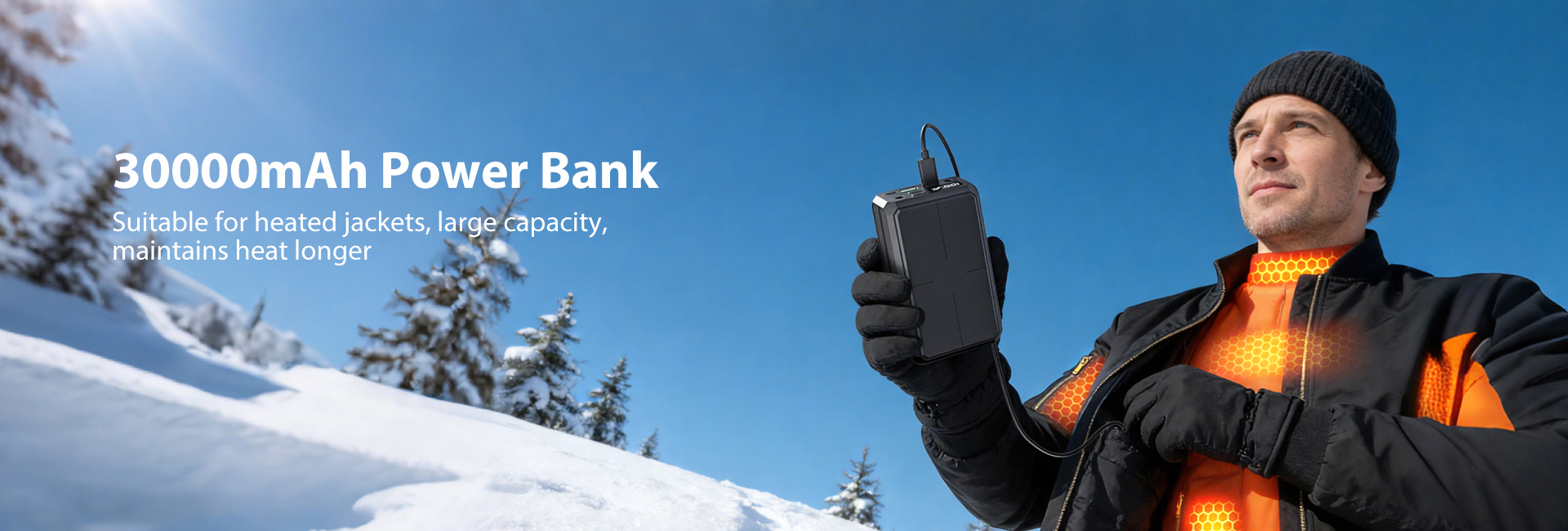
- Heated vests
- Heated jackets
- Heated pads
- Heated blankets
- Heated sleeping pads
- Low-power DC heating accessories
- Small DC food-warming equipment
These devices generally use much less power than a conventional high-power space heater, although actual consumption varies significantly by product and heat setting.
That makes them particularly relevant to campers carrying a battery pack.
The basic concept is simple:
Don’t spend hundreds or thousands of watts trying to heat several cubic meters of tent air if your real objective is simply to keep one person warm.
Ventilation and Carbon Monoxide Safety Should Come First
Whenever combustion is involved, carbon monoxide needs to be taken seriously.
CO cannot be seen or smelled. A person may not realize that dangerous levels are accumulating, particularly while sleeping.
For this reason, fuel-burning heaters should only be used in environments specifically permitted by the manufacturer, with the required ventilation and safety precautions.
A few practical principles are worth remembering:
Never assume that a slightly open tent door automatically makes a fuel-burning heater safe.
Airflow varies with wind, tent configuration, temperature, and equipment placement. A small opening does not provide a universal safety guarantee.
If you use combustion equipment in an appropriate outdoor camping environment, consider having:
- Adequate ventilation
- A battery-powered carbon monoxide alarm where appropriate
- A clear separation between the heating area and sleeping area
- A suitable fire extinguisher
- A stable, non-combustible surface where required
- Proper clearance from fabric and other combustible materials
Most importantly, follow the manufacturer’s instructions and local safety requirements.
The objective of heating is to make camping more comfortable—not to introduce a new hazard into the sleeping environment.
Why Electric Heating Removes CO Risk, But Doesn’t Solve Everything
Electric heating is attractive because there is no combustion process.
That means a properly functioning electric heater does not create carbon monoxide from burning propane or wood.
But “no carbon monoxide” does not mean “no safety risk.”
Electrical heating equipment can still become dangerously hot, overload a circuit, or come into contact with combustible materials.
When considering an electric heating device for camping, check whether it is actually designed for the environment in which you plan to use it.
Look for appropriate safety features such as:
- Overheat protection
- Tip-over protection where applicable
- Suitable insulation
- Appropriate connectors
- Correct voltage and current requirements
- Environmental or moisture protection appropriate to the intended use
There is another practical issue for portable power users: energy consumption.
A high-power heater can consume more energy in a few hours than many of your other camping devices consume during an entire day.
That is why a conventional electric space heater and a portable battery pack are not necessarily a natural combination.
For a battery-powered camping setup, lower-power equipment such as heated clothing or heating pads often makes more practical sense.
How to Size Heating Power for a Tent Setup
Choosing heating equipment starts with understanding the environment.
A large family tent on a windy winter night has very different heating requirements from a small sleeping shelter on a cool autumn evening.
Several factors influence how much warmth you need:
- Tent size
- Outdoor temperature
- Wind
- Humidity
- Sleeping bag temperature rating
- Sleeping pad insulation
- Clothing layers
- Number of campers
- Whether the tent is insulated
- How long the heating device will operate
The following comparison gives a useful starting point:
| Heating Option | Best Use | Main Risk or Limitation |
|---|---|---|
| Propane heater | Appropriate outdoor or well-ventilated camping areas | Carbon monoxide and fire risk |
| Wood stove | Purpose-built hot tent | Requires specialized equipment and careful installation |
| Electric space heater | Suitable powered camping environments | High power demand |
| Heated vest | Personal warmth while resting or fishing | Runtime depends on battery capacity and heat setting |
| Heated pad | Sleeping or sitting warmth | Continuous power consumption |
| DC mini oven | Short food-warming sessions | Higher short-term power demand |
Notice that the table does not identify one universal winner.
Each method solves a different problem.
A propane heater is fundamentally a space-heating device.
A heated vest is a personal-heating device.
A heating pad sits somewhere between the two by warming the surface where your body is in contact with it.
For portable battery applications, personal heating is often much easier to manage because the energy is concentrated on the camper rather than wasted heating the surrounding air.
Why DC Heating Gear Makes More Sense for Portable Power
Portable batteries store a finite amount of energy.
That energy should therefore be allocated according to priority.
Imagine a cold evening at a remote campsite.
You need to keep your phone charged, run a few lights, operate a portable refrigerator, and perhaps charge a camera. At the same time, you want some additional warmth.
Using a very high-power heater could consume a large portion of your available battery capacity.
A low-power heated vest or pad approaches the problem differently.
Instead of heating the whole tent, it delivers heat directly to your body.
This is especially useful in situations such as:
Night Fishing
You’re sitting still for long periods, and your body is producing less heat through physical activity.
A heated vest can provide localized warmth without requiring a large heating system.
Truck Bed Camping
The sleeping environment may be exposed to cold air from underneath the vehicle.
An insulated sleeping pad combined with a suitable heated pad can provide targeted warmth while avoiding the need to heat the entire sleeping area.
Cold-Weather Campfire Evenings
Even after a campfire has warmed you temporarily, temperatures can drop quickly once you return to your tent.
A heated vest or other personal heating equipment can provide supplementary warmth without introducing combustion into the sleeping space.
Outdoor Photography
Photographers often spend long periods standing still while waiting for the right light.
Personal heating equipment can be useful because it adds warmth without requiring a large heating appliance.
The advantage of this approach is not simply lower power consumption.
It also gives you control over where the energy goes.
How Merpower DC Power Packs Fit Tent Heating Scenarios
This is where a portable DC battery pack can become part of a broader outdoor power system.
A Merpower portable battery can be used with compatible DC equipment such as heated clothing, heating pads, camping lights, communication equipment, and other outdoor electronics, provided the electrical specifications match.
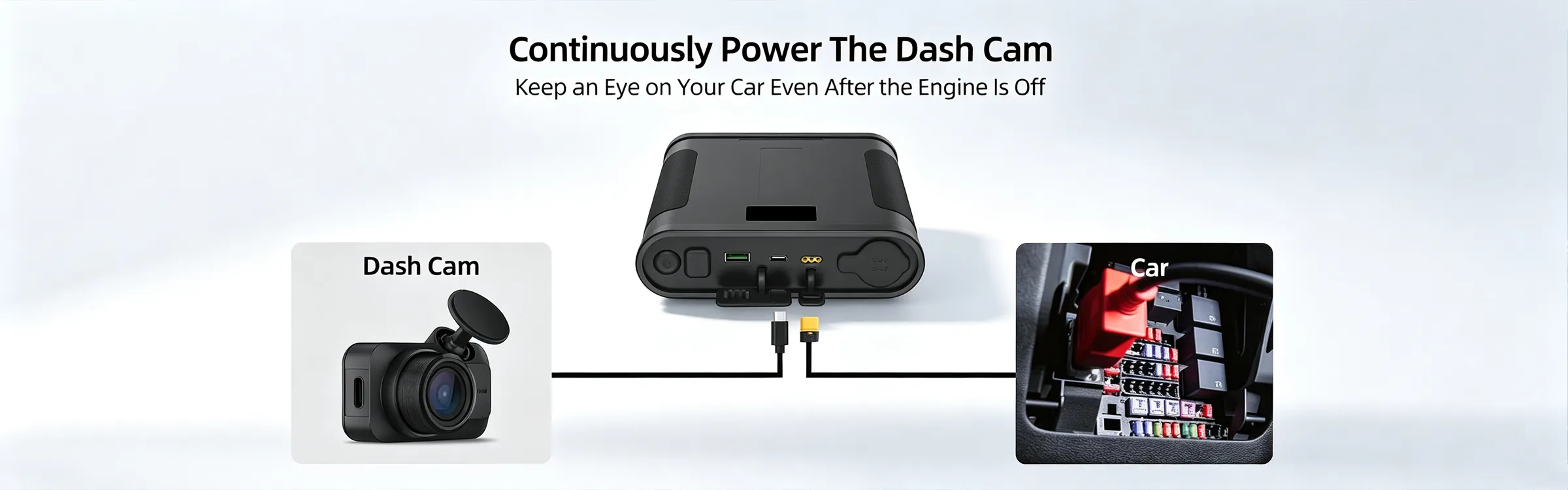
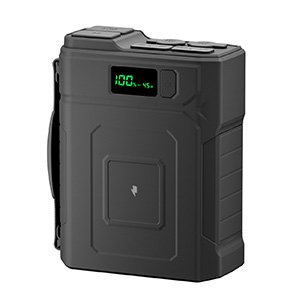
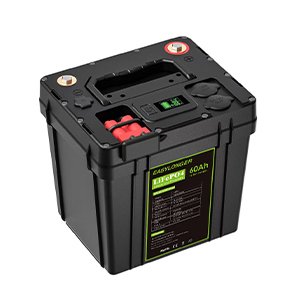
The GP45SE, for example, uses a LiFePO4 battery system and provides USB, USB-C, DC, and Large Anderson output options. This configuration gives outdoor users several ways to connect compatible equipment without building a permanent electrical system into the campsite.
For a cold-weather camping setup, a camper might use the battery to support:
- A compatible heated vest
- A compatible heated pad
- DC camping equipment
- LED lighting
- Phone charging
- Camera equipment
- Other compatible low- to medium-power outdoor devices
The important word here is compatible.
A DC battery pack is not automatically compatible with every heater.
Before connecting a heating device, check:
Voltage → Current → Connector → Polarity → Maximum output power
For example, if a heater requires a particular DC voltage, connecting it to an incompatible voltage can damage the equipment or create a safety problem.
You also need to consider operating time.
If a heating device consumes 40W and operates for five hours, its theoretical energy consumption is:
40W × 5h = 200Wh
Actual battery usage will depend on conversion efficiency, operating conditions, and the heating device’s control method.
This is why responsible portable-power design is not about claiming that one battery can “run any heater.”
It is about matching the battery to the equipment.
For Merpower, that means positioning DC power around realistic outdoor applications rather than promising continuous operation of high-power space heaters.
A Practical Warmth Strategy for a Safe Night in the Tent
The most effective cold-weather setup usually combines several small improvements.
Step 1: Insulate Yourself From the Ground
The ground can remove body heat surprisingly quickly.
A sleeping pad with appropriate insulation is therefore essential.
A thicker mattress is not necessarily the same thing as better insulation. Check the product’s cold-weather performance and insulation rating when choosing equipment.
Step 2: Use the Right Sleeping Bag
Choose a sleeping bag appropriate for the expected temperature.
Don’t treat a heater as a substitute for an appropriately rated sleeping system.
Step 3: Dress in Layers
A base layer, insulating layer, and weather-resistant outer layer give you more flexibility than relying on one extremely thick garment.
Avoid going to bed in wet clothing.
Step 4: Add Targeted Heat
If conditions require additional warmth, a heated vest or heating pad can supplement your sleeping system.
This is where a portable DC battery can be useful.
Step 5: Keep Your Battery Accessible
Place the battery on a stable, dry surface where airflow is not blocked.
Do not bury it underneath sleeping bags, blankets, or clothing.
Step 6: Preserve Emergency Power
Don’t consume your entire battery overnight just to maintain warmth.
Keep enough energy available for your phone, lighting, communication equipment, and unexpected needs.
This is especially important when camping far from roads or other people.
Common Tent Heating Mistakes to Avoid
Some mistakes are surprisingly common.
Using a Fuel-Burning Heater While Sleeping in an Enclosed Tent
This can create serious carbon monoxide and fire risks.
A heater designed for a specific outdoor or ventilated environment should not automatically be assumed safe for an enclosed sleeping space.
Assuming “A Little Ventilation” Is Always Enough
There is no universal amount of tent opening that makes a combustion appliance safe.
Follow the equipment manufacturer’s requirements.
Connecting a High-Power Heater to a Small Battery
A battery may physically accept the connector while still being completely unsuitable for the heater’s power demand.
Always check the electrical specifications first.
Ignoring Voltage and Polarity
DC equipment is not interchangeable simply because two connectors look similar.
Check voltage, current, connector type, and polarity before connecting equipment.
Covering the Battery With Bedding
Portable batteries need appropriate ventilation and should not be buried under blankets or clothing.
Putting a Heater Too Close to Tent Fabric
Heat sources need adequate clearance.
Never assume that because a device is small, it can safely sit next to a sleeping bag or tent wall.
Forgetting the Ground
Campers sometimes focus entirely on the air temperature while ignoring heat loss through the sleeping surface.
A good sleeping pad can make a major difference.
Trying to Heat the Entire Tent When You Only Need Personal Warmth
This is perhaps the most important power-management lesson.
If the goal is to keep one person comfortable, targeted heating can often be more practical than trying to heat the entire volume of air inside the tent.
Frequently Asked Questions
What is the safest way to heat a tent?
There is no single heating method that is universally safe in every tent. Start with insulation, appropriate clothing, and a suitable sleeping system. For additional warmth, personal heating equipment can reduce the need to heat the entire tent. Fuel-burning equipment requires particular attention to ventilation, carbon monoxide, fire, and manufacturer instructions.
Can I use a propane heater inside a tent?
Do not assume that a propane heater is safe to use inside an enclosed tent. Combustion can produce carbon monoxide, and the heater also introduces a fire and hot-surface hazard. Only use a fuel-burning heater in environments specifically permitted by the manufacturer and follow all ventilation and safety requirements.
Are electric tent heaters safer than propane heaters?
Electric heating does not involve combustion, so it does not create carbon monoxide through fuel burning. However, electric heaters still present electrical, overheating, fire, and power-consumption risks. Whether a particular heater is appropriate depends on its design, the environment, and the available power source.
Can a portable power station run a tent heater?
It depends entirely on the heater’s electrical requirements and the battery’s output capability. High-power electric heaters can consume energy very quickly. A lower-power heated vest, heated pad, or other DC heating device may be much more practical for a portable battery system.
Can Merpower DC battery packs power heated vests or pads?
They can power compatible DC heating equipment when the voltage, current, connector, polarity, and maximum output requirements match the battery’s specifications. Always check both products’ technical specifications before making a connection.
How do I know if my heater is compatible with a DC power pack?
Check five things before connecting the equipment: voltage, current, connector, polarity, and maximum power. The battery must be capable of supplying the heater’s electrical requirements. If any specification is unclear, consult the equipment manufacturer rather than guessing.
Is it better to heat the whole tent or warm the person directly?
For portable battery applications, warming the person directly can be more energy-efficient than continuously heating the entire tent. Heated vests and pads are good examples of targeted heating. However, they should supplement—not replace—a suitable sleeping bag, insulated sleeping pad, appropriate clothing, and proper cold-weather preparation.
Conclusion: Warm the Camper, Not Just the Tent
A comfortable cold-weather camping night isn’t necessarily about finding the most powerful tent heater.
It’s about understanding where heat is being lost and deciding where your limited energy should go.
Fuel-burning heaters can provide substantial heat, but combustion introduces carbon monoxide and fire considerations that must be taken seriously. Electric heaters eliminate combustion, but conventional high-power models can place a heavy load on a portable battery.
For battery-powered camping, a different approach can make more sense:
Insulate first. Dress appropriately. Protect yourself from wind and moisture. Then use targeted low-power heating where it actually helps.
A heated vest can warm your body while you’re sitting outside. A heated pad can add warmth to a sleeping or sitting surface. Low-power DC heating equipment can provide useful comfort without demanding the same energy as a large space heater.
This is also where DC portable power has a practical role.
Merpower’s approach is not to suggest that a portable battery should power every heater imaginable. The better approach is to match the battery to realistic outdoor equipment, verify the electrical specifications, and use available energy where it provides the most value.
For campers, that means a safer and more practical mindset:
Don’t just ask how much heat a device can produce. Ask how you can stay warm while using your equipment responsibly.
In cold-weather camping, that distinction can make the difference between a complicated power setup and a comfortable night outdoors.