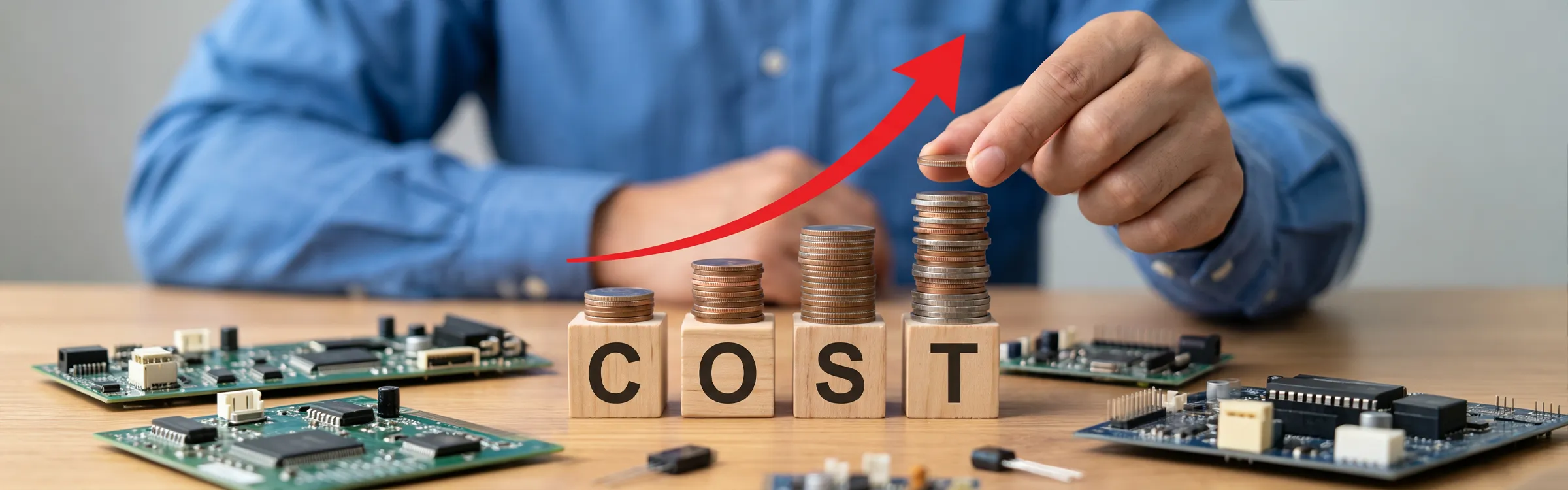
As of August 20, 2026, the battery market is no longer operating under the same pricing conditions many buyers became used to in 2024 and 2025. After a long period of aggressive competition and weak pricing, the industry has moved into a new phase: raw material costs have rebounded, energy storage demand has remained strong, and more upstream suppliers are passing cost pressure downstream. That is why battery cell prices are rising again in 2026, and why portable power station quotations are also being adjusted across the market. (iea.org)
1. The first reason is simple: upstream battery material costs have moved back up
The clearest signal comes from lithium and related battery materials. The IEA says average battery prices still declined in 2025, but it also notes that lithium and cobalt prices increased over the year, and that lithium prices at the beginning of 2026 were more than twice as high as in the same period of 2025. The IEA adds that faster-than-expected demand growth, especially from battery energy storage, low inventories in China, and temporary supply disruptions all contributed to that rebound. (iea.org)That raw-material pressure is also visible further down the chain. In July 2026, SMM reported that Hunan Yuneng, a leading LFP material producer, notified customers of a price adjustment effective August 1. According to that report, key LFP raw materials such as sulphur, phosphoric acid, and ferrous sulphate had kept rising since March 2026, and iron phosphate prices had climbed from about RMB 10,000/mt at the start of the year to about RMB 15,000/mt, an increase of more than 50%. (news.metal.com)
2. The second reason is demand: energy storage is pulling the whole chain upward
This is not only a raw-material story. It is also a demand story. The IEA says battery storage was the fastest-growing power technology in 2025, with 108 GW of new battery storage capacity deployed worldwide, up 40% from 2024. It also notes that LFP batteries now account for around 90% of those deployments. In other words, the same chemistry widely used in portable power products is also being pulled strongly by the global storage market. (iea.org)Reuters reported in June 2026 that lithium producers had grown more optimistic about market recovery because booming battery storage demand was offsetting weakness in some EV markets. At the same conference, Fastmarkets estimated that lithium demand from battery storage systems was growing at about 40% per year. That matters because when storage demand becomes a primary growth driver, high-quality cell supply and upstream materials become harder to keep cheap for everyone else. (money.usnews.com)
3. The third reason is cost transmission: price increases are no longer isolated events
By itself, higher demand does not always mean higher selling prices. What changed in 2026 is that more suppliers began actively transmitting cost pressure downstream instead of absorbing it. Back in December 2025, Yicai reported that major Chinese LFP material suppliers were already preparing to raise prices in 2026 after prolonged industry losses and rising input costs, with some producers already implementing increases and others negotiating with customers. (yicaiglobal.com)That trend continued into 2026. SMM’s July report on Hunan Yuneng showed a further industry move to increase processing fees, while ChemNet reported on August 11 that EVE Energy would add a 2% consumption-tax cost to the original tax-free supply price for some domestic battery products starting September 1, 2026, following China’s new policy. Taken together, these developments suggest that 2026 is not a year of isolated quotations; it is a year of broader cost pass-through across the battery value chain. (news.metal.com)
4. Why this affects portable power station pricing
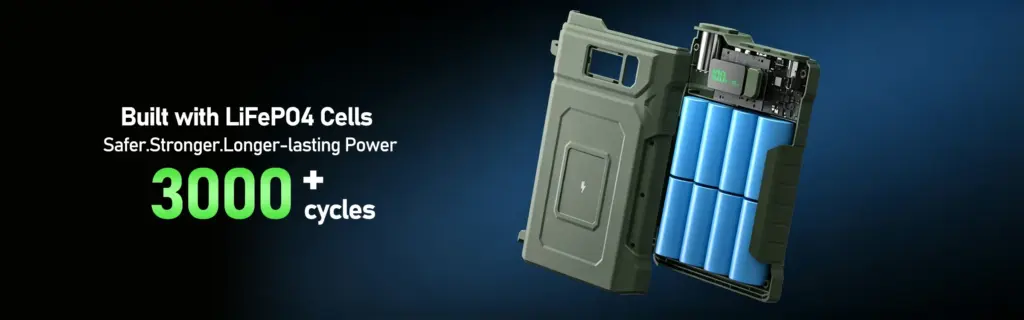
A portable power station is not priced only by the plastic shell or the finished assembly. Its quotation is built on the battery cell, battery pack design, BMS, electronics, testing, and compliance-related manufacturing. When the upstream cell and material market moves upward, finished-product pricing does not stay completely untouched. That is especially true in categories built around LiFePO4 and other large-capacity battery systems, where stable cell supply, consistency, and safety requirements matter as much as headline capacity. This is a practical supply-chain effect, not a sudden change in logic. (iea.org)Another point buyers often miss is timing. When the industry moves from oversupply and price war conditions into a period of margin repair, suppliers do not always adjust all prices at once. Some absorb part of the increase temporarily, some renegotiate by model or order cycle, and some phase in changes after existing contracts expire. That is one reason quotations can look stable for a while and then shift more obviously over a short period. This is consistent with the pattern now visible across materials, cells, and battery-related products in 2026. (yicaiglobal.com)
5. What this means for Merpower customers
Against this market background, our recent portable power station quotations have also been adjusted upward for some models and projects. This is not because the product category has changed, and it is not because we are adding arbitrary margin. It is because the battery industry in 2026 is operating under higher upstream costs and a firmer pricing environment than before.For buyers, the practical takeaway is straightforward: if you are planning an OEM or wholesale portable power project this season, it is better to confirm specifications and lock quotations earlier rather than assuming older prices will remain available indefinitely. In a market where battery materials, storage demand, and cell pricing are all moving, delayed decisions can easily become more expensive decisions. (iea.org)
Final Thoughts
The main point is not that batteries are “suddenly expensive again.” The real point is that 2026 marks a shift away from the unusually weak pricing environment that shaped much of the last cycle. Lithium prices have rebounded from 2025 levels, storage demand is expanding quickly, and more suppliers are now passing cost pressure through the chain. In that context, higher portable power station quotations are not unusual. They are a direct reflection of how the battery market is changing in real time. (iea.org)