
















Introduction
Backpackers do not need more gadgets. They need fewer power mistakes.
That is the better way to think about trail charging. Many hikers start with the wrong question: What is the best solar charger for backpacking? The more useful question is: Do I even need solar for this trip? On many short hikes, the answer is no. On some longer routes, especially where sun exposure is consistent and device use is heavier, solar starts to make sense. The problem is that many people buy the panel first and build the plan later.
A smarter trail power setup starts with three things: how many days you will be out, what devices actually matter, and how much sunlight you can realistically expect. Once those are clear, the choice between a power bank and a solar charger becomes much easier.
This matters because electronics are no longer optional for many hikers. Phones often handle mapping, weather checks, emergency communication, and photos. Headlamps are basic safety gear. GPS watches, satellite communicators, and compact cameras are common on longer routes. The National Park Service includes navigation, illumination, and backup power planning in its broader outdoor preparedness guidance, which reflects how important dependable electronics have become in real backcountry use.
Why Backpackers Need a Real Power Plan, Not Just a Charger
A charger is only one piece of the system.
Backpackers usually need to think in three layers: power source, storage, and use. REI’s guidance on portable power follows the same basic logic. First you collect energy, then you store it, then you deliver it to the device that needs it. On the trail, that usually means one of two models: carry stored power from the start, or carry stored power plus a way to add more energy over time.
That distinction matters because a solar panel is not a magic battery. It does not help much at night, in deep shade, under heavy cloud cover, or on routes where your pack spends long hours facing the wrong direction. A power bank, by contrast, is simple. If it is charged before the trip, the energy is already there.
That is why a real plan starts with use, not hardware. Ask:
- Which devices are essential?
- Which devices are optional?
- How many days do they need to last?
- How often will I actually be in strong sun?
- Is my route open and exposed, or wooded and shaded?
Those answers usually determine the right setup faster than any gear list.
What Devices Backpackers Really Need to Keep Charged
Not every device on a trail deserves equal priority.
Some are safety tools. Some are convenience tools. Some are entertainment or documentation. If you treat them all the same, you usually overpack power.
Here is the more practical breakdown:
| Device Type | Priority on Trail | Typical Role |
|---|---|---|
| Smartphone | High | Navigation, weather, photos, emergency contact |
| Headlamp | High | Safety after dark |
| Satellite communicator | High on remote routes | Emergency messaging and tracking |
| GPS watch | Medium to high | Navigation support and route tracking |
| Camera / action camera | Medium | Photos and video |
| Earbuds / speaker | Low | Comfort and entertainment |
The National Park Service specifically recommends extra batteries or backup power for critical items such as phones and headlamps. That is the right mindset for backpacking power generally: protect the devices that affect safety and decision-making first.
For many hikers, that means the phone and headlamp matter most. A satellite communicator may be equally important on remote or low-signal routes. A camera matters less than people think once weight, weather, and recharge reality are factored in.
The clearer you are about this hierarchy, the easier it is to size your power setup.
When a Power Bank Is Better Than a Solar Charger
For a lot of backpacking trips, a power bank is the better answer.
That is especially true for one- to three-day hikes, forested routes, bad-weather forecasts, and trips where your electronics are limited to a phone, headlamp, and maybe a watch. In these situations, a compact power bank is lighter, more predictable, and less annoying to manage than a folding solar panel.
REI’s advice points in the same direction. Solar can be useful for off-grid power, but it is slower, more condition-dependent, and works best when paired with stored power rather than treated as a stand-alone solution.
A power bank is better when:
- the trip is short
- the route has lots of tree cover
- weather is uncertain
- you charge mainly at night or in camp
- your daily device load is modest
- you care more about reliability than recharge potential
This is why many experienced hikers treat solar panels as situational rather than standard. If your trip is only a weekend, carrying sunlight as a plan is often less reliable than carrying enough battery from the start.
When Solar Charging Actually Starts to Make Sense
Solar becomes more useful when the trip gets longer and the route gets brighter.
A multi-day trail with steady sun exposure is a different power environment from a shaded weekend loop. If you are out for four, five, or more days, especially on exposed routes, a solar charger can start adding real value. Not because it replaces stored power completely, but because it extends the system.
This is where people often misunderstand trail solar. Its main job is usually not to keep devices charging directly all day. Its better role is to gradually refill a power bank when conditions allow, so your stored energy lasts longer.
Solar makes more sense when:
- the route has open terrain
- you expect strong sun for several hours per day
- the trip is long enough that one or two power banks feel limiting
- you are carrying higher-use devices like GPS tracking, satellite messaging, or frequent photo gear
- resupply or wall charging is not available often
Even then, expectations need to stay realistic. Real trail output rarely matches the panel’s headline wattage. Shade, cloud cover, panel angle, pack movement, dust, heat, and route direction all reduce performance. REI explicitly notes that solar performance depends heavily on conditions and positioning, which is why spec-sheet output should never be treated as guaranteed field output.
What to Look for in a Backpacking Solar Charger
Most backpackers make the same mistake when comparing solar chargers: they look at wattage first.
Wattage matters, but it is not the only thing that matters, and it is often not the first thing that matters. A better backpacking solar charger is the one you will actually carry, deploy, and use well.
Focus on these factors:
Weight
A panel that is technically powerful but too heavy for your trail style is the wrong panel.
Packed size
Folded dimensions matter because awkward gear is less likely to be deployed consistently.
Output compatibility
USB-C and stable USB output matter more than flashy marketing. Trail charging should be simple.
Durability
Backpacking gear gets bent, dusted, stuffed, and exposed to weather shifts. Fragile panels are a poor fit.
Ease of attachment
Some hikers like charging while walking. Others prefer charging during breaks or in camp. In both cases, setup should be simple.
System compatibility
A good solar charger should work smoothly with your power bank. On-trail charging is usually more stable when the panel refills a battery pack rather than charging a phone directly.
That last point is especially important. Direct phone charging from a panel sounds efficient, but it often creates interruption problems when light conditions change. Charging a power bank first usually gives you a more stable trail system.
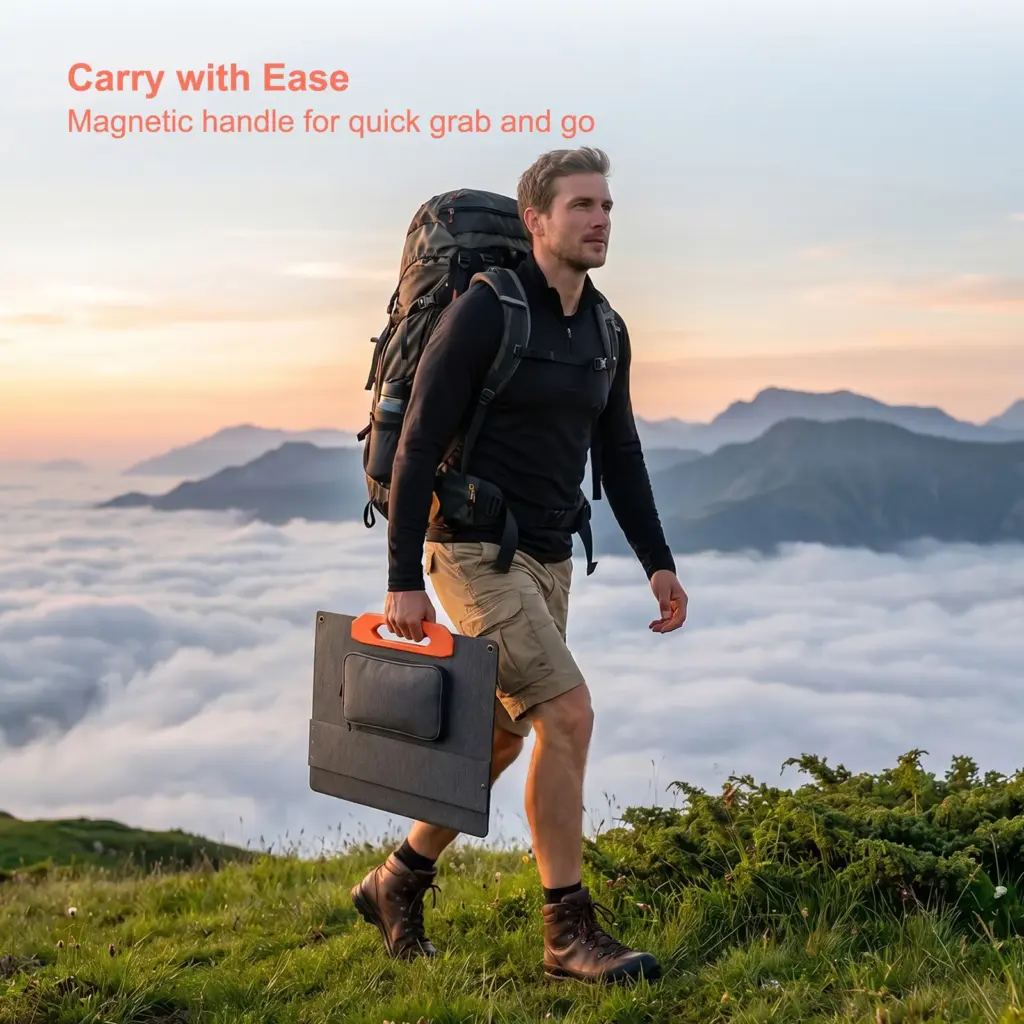
How Much Power You Can Realistically Get From the Sun on the Trail
Less than the marketing suggests, and sometimes enough to matter.
That is the honest answer.
Solar panels are rated under ideal test conditions. Trails are not ideal conditions. You are moving, your pack is changing angle, trees block light, clouds roll in, and afternoons do not behave like laboratory sunlight. On some days, your panel may add useful energy. On other days, the gain may be small enough that it barely changes your overall budget.
That does not make solar useless. It just means it should be treated as range extension, not guaranteed daily replenishment.
A better way to think about solar output is this:
- Best case: meaningful top-up on long, sunny, exposed days
- Typical case: partial recovery that slows battery drain across the trip
- Worst case: very little useful charging because conditions never cooperate
Backpackers who understand this tend to build better systems. They do not assume the sun will “cover” everything. They start with enough stored power to stay safe, then treat solar as a bonus that improves margin.
How to Size Power for a Multi-Day Backpacking Trip
Sizing should start with daily use, not trip length alone.
A three-day trip with light phone use may need less total power than a two-day trip with heavy navigation, filming, and satellite messaging. So the first step is to estimate what each device will actually consume.
A simple planning model looks like this:
| Trip Type | Typical Best Choice | Why |
|---|---|---|
| 1–2 day weekend hike | Small power bank | Lightest and most reliable option |
| 3-day backpacking trip | Medium power bank | Usually enough without relying on sun |
| 5+ day exposed trail section | Power bank + solar panel | Better for extending runtime over multiple days |
| Long trail with frequent town stops | Power bank only | Easier to recharge in town than manage a panel daily |
This is where discipline matters more than gear. If your phone stays in airplane mode, screen brightness is controlled, offline maps are downloaded, and unnecessary background use is limited, your battery lasts much longer. The same is true for watches, cameras, and satellite devices.
The best sizing question is not “How big a solar charger do I need?” It is “How much energy do I actually use per day, and what is the lightest reliable way to support it?”
How to Maximize Solar Charging on the Trail
If you do carry solar, use it intentionally.
A panel clipped randomly to a moving backpack may collect some energy, but not always efficiently. Better results usually come from deliberate habits:
- angle the panel toward direct sun during longer breaks
- charge the power bank during exposed lunch stops
- keep the panel clean and free of dust
- avoid shading even on part of the panel
- use shorter, dependable cables
- do not assume cloudy mornings will recover later unless the route opens up
It also helps to separate hiking logic from camp logic. While moving, convenience matters most. While stopped, positioning matters more. If you rely on solar, breaks and camp setup may produce more useful charging than passive attachment during all-day hiking.
NPS battery safety guidance is also relevant here. Lithium-ion batteries should be protected from heat stress, damage, and unsafe charging conditions. The agency advises against exposing batteries to excessive heat and warns against charging them on flammable or poorly ventilated surfaces. That matters on trail because overheating a battery in direct sun or inside hot gear storage is a preventable mistake.
Frequently Asked Questions
Is a solar charger worth carrying for a weekend backpacking trip?
Usually not. For many one- to two-night trips, a power bank is lighter, simpler, and more reliable.
Should I charge my phone directly from a solar panel?
Usually it is better to charge a power bank first, then charge the phone from the power bank later. This creates a more stable system when sunlight changes.
How many watts do backpackers really need?
There is no single answer. The right size depends on route length, sun exposure, and device use. Many hikers need less than they think because good battery discipline reduces daily consumption significantly.
Is solar better for thru-hiking than weekend hiking?
Often yes. On longer routes with repeated sunny days, solar has more time to justify its weight.
What is the best backup option for cloudy trails?
Stored power. A charged power bank remains the most dependable backup when solar conditions are poor.
The Right Solar Charger Keeps Backpackers Powered Up Mile After Mile
The best backpacking power setup is not the one with the most hardware. It is the one with the fewest bad assumptions.
For short trips, that often means carrying enough stored power and skipping solar entirely. For longer, sunnier routes, a solar charger can become useful, but only when it is part of a realistic system and not a substitute for planning.
That is the real trail lesson: power should be designed around the route, the weather, and the devices that actually matter. When backpackers build from that logic, they carry less wasted gear, make fewer charging mistakes, and stay more reliable mile after mile.