
















Table of Contents
Introduction
Keeping food cold is one of those things people rarely think about until they leave the grid.
At home, refrigeration is invisible. Plug it in, forget it exists.
But once you move into camping, van life, RV travel, or remote cabin living, refrigeration suddenly becomes a real engineering problem:
How do you keep food cold when there is no stable grid power?
This question has pushed a lot of outdoor users toward two popular solutions:
- “solar-powered refrigerators”
- portable compressor fridges powered by batteries
At first glance, they seem similar. In practice, they behave very differently in real-world off-grid environments.
And more importantly, neither works alone without a properly sized energy system behind it.
Why Refrigeration Is One of the Hardest Parts of Off-Grid Living
Most people underestimate refrigeration because they associate it with low, steady power use.
That assumption is only partially correct.
Food safety depends on stability, not just cooling
A fridge that runs “sometimes” is not enough.
Once internal temperatures rise above safe levels for too long, food spoilage becomes a risk. Unlike lighting or phone charging, refrigeration requires consistency.
Cooling systems run longer than expected
Even efficient 12V compressor fridges cycle on and off throughout the day and night. In hot environments, runtime increases significantly.
That means:
- daytime heat increases load
- night cooling still requires energy
- insulation only reduces, not eliminates, power demand
Off-grid users don’t fail because of fridge size
They usually fail because of energy planning.
The fridge is not the problem.
The power system behind it is.
Solar Refrigerator vs Portable Fridge: The Real Difference
The term “solar refrigerator” is often misunderstood.
What people think a solar refrigerator is
Many users imagine a fridge that runs directly from sunlight.
No batteries. No storage. Just solar → fridge.
In reality, this is not how most systems work.
What a solar-powered refrigerator actually is
A solar refrigeration setup typically includes:
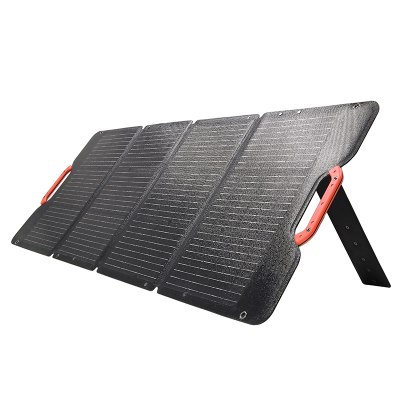
- solar panels
- charge controller
- battery storage
- DC refrigerator
So the fridge is still running on stored energy, not direct sunlight.
Solar is the generation source, not the direct power supply.
What a portable fridge actually is
A portable fridge (usually 12V compressor type) is:
- a low-voltage DC appliance
- designed to run from batteries
- optimized for mobility and efficiency
It does not require a “solar system” to function.
It only requires stable DC power.
How Each System Works in Real Off-Grid Conditions
Solar refrigeration system flow
Solar panels generate energy during the day → battery stores energy → fridge runs continuously from stored energy.
Portable fridge system flow
Battery directly powers the fridge → solar is optional for recharging.
What happens when weather changes?
This is where differences become important.
- cloudy day → solar output drops
- night → no solar generation
- high temperature → fridge consumption increases
Without sufficient battery capacity, both systems struggle in the same way.
Efficiency Comparison: Which Setup Works Better in Practice?
| Feature | Solar Refrigerator System | Portable Compressor Fridge |
|---|---|---|
| Setup complexity | High | Low |
| Mobility | Limited | High |
| Energy efficiency | Depends on system design | High (optimized compressors) |
| Cost flexibility | Higher initial cost | Scalable |
| Maintenance | More components | Fewer components |
| Camping suitability | Medium | Excellent |
| Van life suitability | Good | Excellent |
| Emergency backup use | Moderate | Strong |
The key takeaway:
Solar systems are energy ecosystems.
Portable fridges are appliances.
They solve different problems.
How Much Power Does a Portable Fridge Actually Use?
This is where most users miscalculate.
A typical 12V compressor fridge consumes:
- 30W to 60W while running
- cycles throughout the day
- higher consumption in hot environments
Example daily usage scenario
A 40W fridge running at ~40% duty cycle:
- 40W × 10 hours equivalent runtime ≈ 400Wh/day
This is a realistic baseline for camping or RV use.
Now add:
- phone charging
- lighting
- camera gear
- laptop usage
Total daily energy demand increases quickly.
Why Battery Selection Matters More Than Solar Panel Size
A common mistake is buying large solar panels but underestimating storage.
In off-grid refrigeration, the battery is the system’s backbone.
Solar only refills it.
Without storage capacity:
- fridge shuts down at night
- temperature becomes unstable
- food safety is compromised
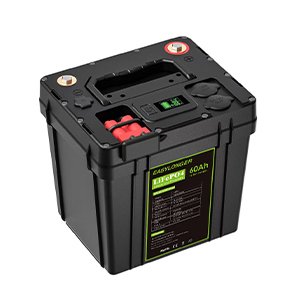
Why LiFePO4 Batteries Are the Preferred Choice
For refrigeration use, LiFePO4 batteries have become the standard because they offer:
- stable discharge voltage
- long cycle life
- improved thermal safety
- predictable performance under load
This stability is especially important for compressor-based refrigeration systems, which prefer consistent voltage rather than fluctuating output.
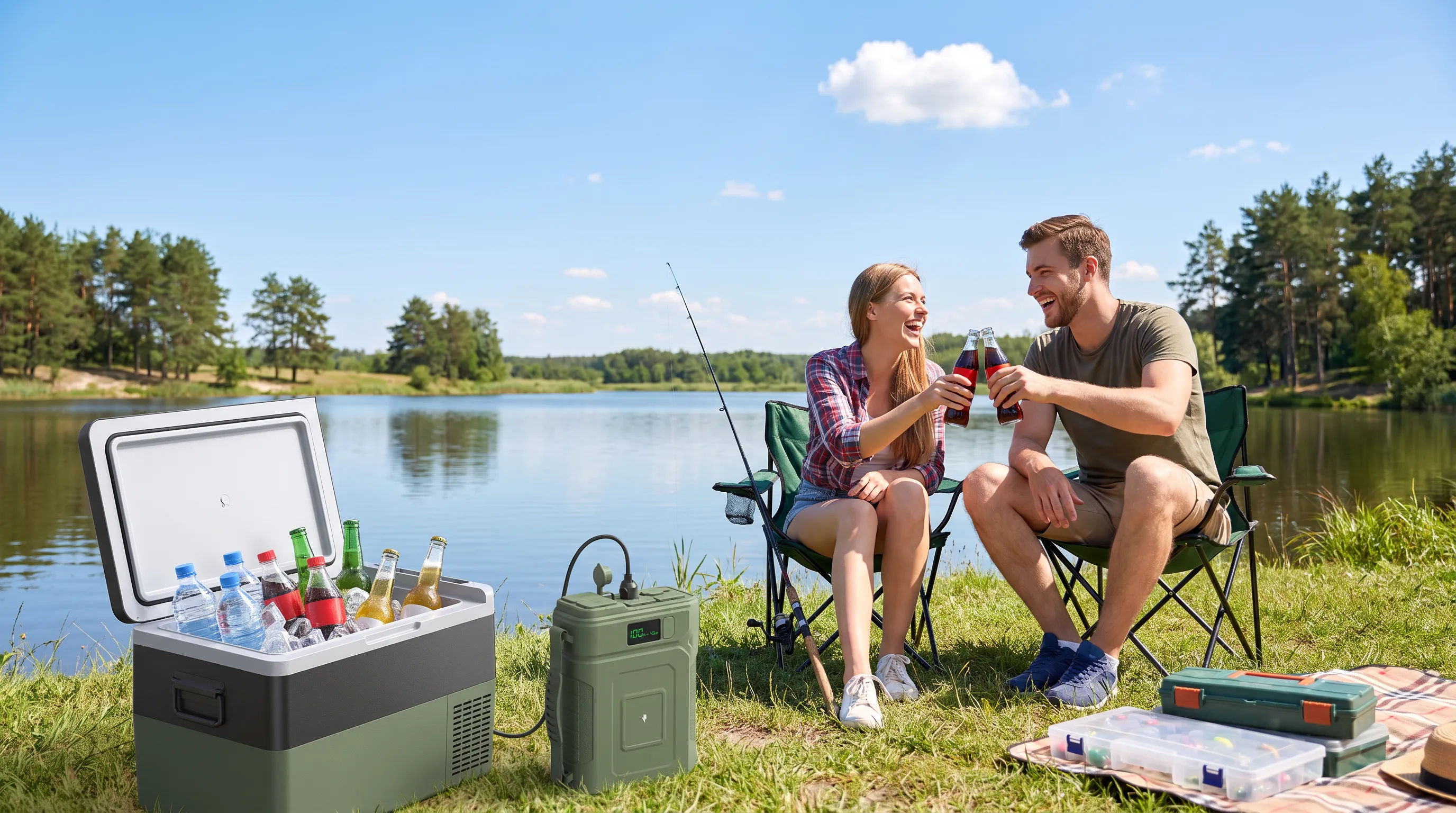
A Practical Off-Grid Cooling Setup (Real-World Example)
Instead of focusing on “solar fridge vs portable fridge,” most experienced users build hybrid systems.
Weekend camping setup
- Portable fridge
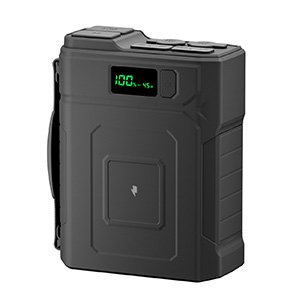
- Merpower GP35SE
- Optional small solar panel
This setup supports short trips with light energy demand.
Extended RV or van life setup
- Portable fridge
- Merpower GP45SE
- Mid-size solar panel (100W class)
This configuration supports multi-day autonomy with recharging capability.
Remote or semi-stationary setup
- Portable fridge
- GP45SE
- Larger solar input system
Here, the system becomes a full off-grid energy loop.
The key idea is not the fridge.
It is the energy architecture behind it.
Common Mistakes in Off-Grid Refrigeration Planning
1. Calculating based on peak power instead of daily energy
A fridge labeled “40W” does not mean 40W continuous consumption.
2. Ignoring night-time consumption
Many users forget that refrigeration runs 24 hours a day.
3. Oversizing solar, undersizing battery
Solar generates energy. Battery stores it.
Without storage, solar alone cannot guarantee refrigeration.
4. Assuming all “solar fridges” are self-sufficient
Most still rely heavily on battery buffering.
Which Option Actually Makes Sense?
For campers
Portable compressor fridge + battery system is usually the most practical.
For van life users
Flexibility matters more than system complexity. Portable fridge systems dominate.
For remote cabins
A full solar refrigeration system can make sense due to space and installation capacity.
For emergency backup
Battery-based portable refrigeration is more reliable during outages.
The Simplest Reliable Off-Grid Cooling Strategy
When you strip away marketing terms, most off-grid cooling systems converge on the same structure:
Portable fridge + LiFePO4 battery + optional solar input
This approach works because it separates:
- energy generation (solar)
- energy storage (battery)
- energy consumption (fridge)
In real-world usage, this separation is what creates stability.
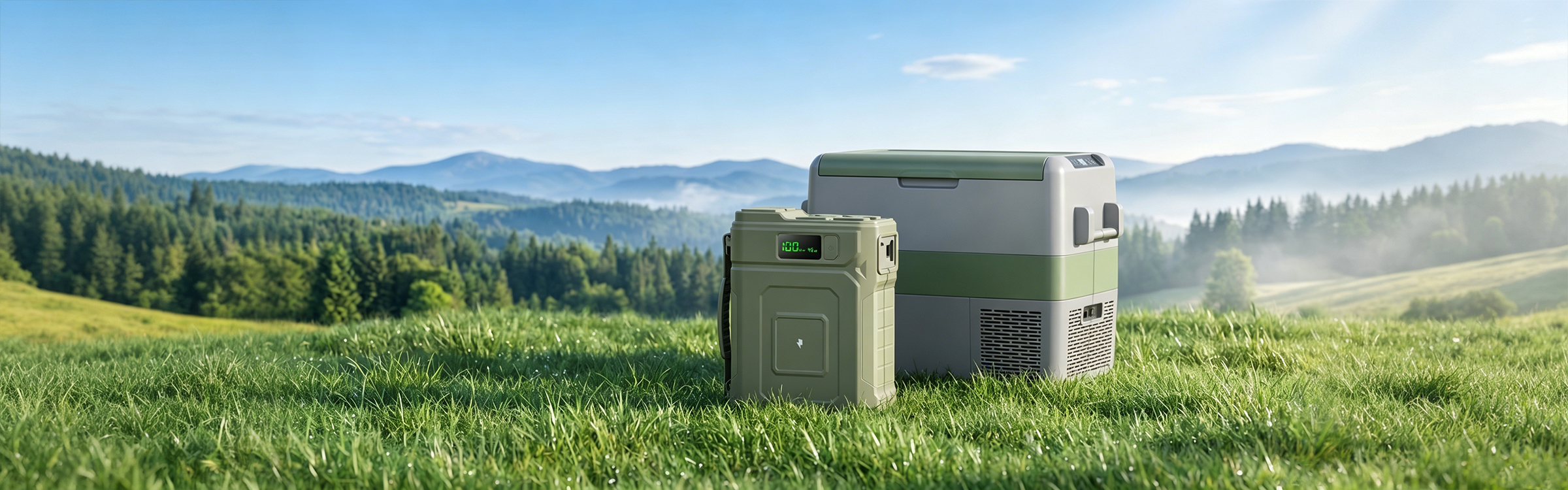
Systems such as the Merpower GP45SE fit into this architecture by providing a stable LiFePO4-based energy source that can support refrigeration, lighting, and other essential off-grid loads without relying on complex installation or fixed infrastructure.
Frequently Asked Questions
Can a portable power station run a fridge?
Yes. Most 12V compressor fridges can run efficiently from a properly sized LiFePO4 battery system.
How long can a battery power a portable fridge?
It depends on fridge size and ambient temperature, but typically ranges from 1–3 days on mid-sized battery systems.
Is a solar refrigerator worth it?
Only in setups where solar infrastructure is already installed and space is not a limitation.
What size battery do I need for a camping fridge?
Most users need at least 300–600Wh for short trips, with larger capacities for multi-day use.
Can a 100W solar panel run a fridge?
It can support charging, but not continuous operation alone without battery storage.
Are LiFePO4 batteries good for refrigeration systems?
Yes. They are widely used due to their stability, safety, and long cycle life.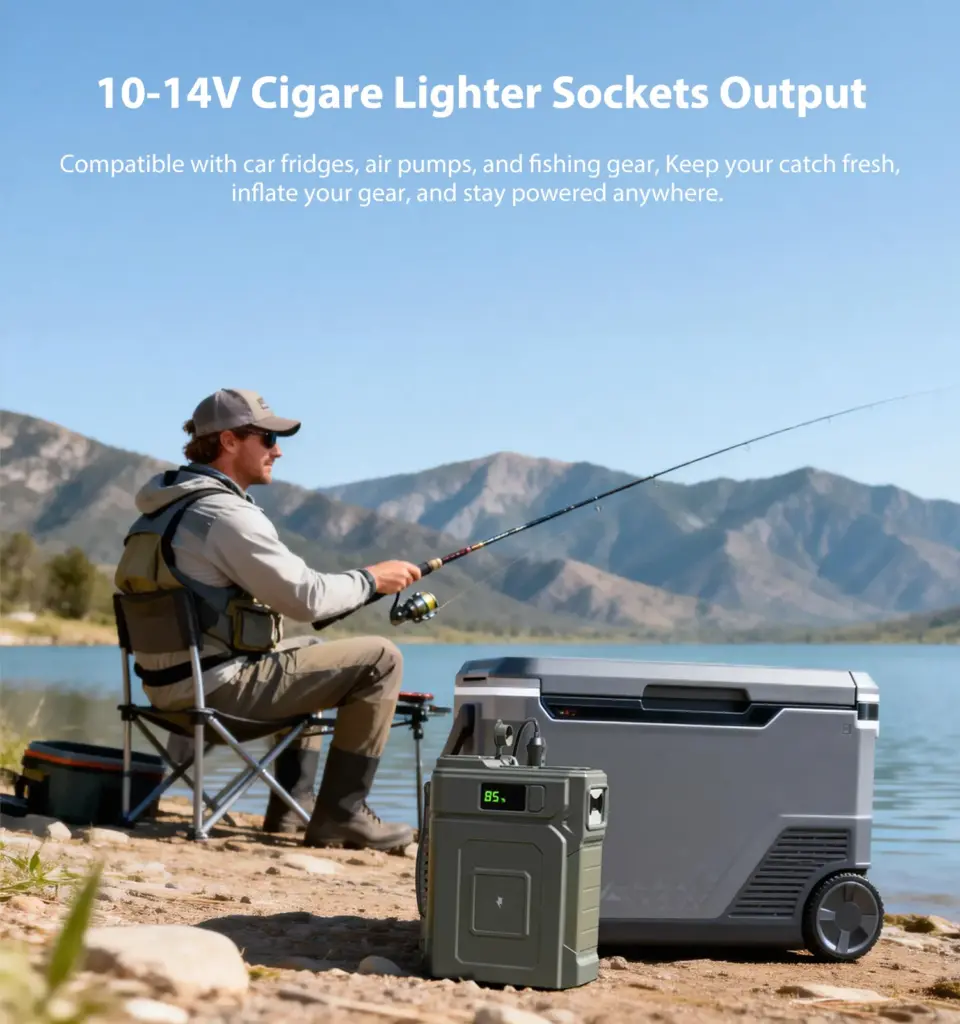
Final Thoughts
The debate between solar refrigerators and portable fridges often misses the real issue.
Off-grid refrigeration is not about choosing a product.
It is about designing an energy system.
Once users understand that refrigeration depends on stored energy, not just generation or appliance type, the solution becomes much clearer.
And in most real-world outdoor scenarios, a well-balanced system built around a portable fridge, a LiFePO4 battery like the Merpower GP45SE, and optional solar input delivers the most reliable and flexible off-grid cooling experience.