A Better Portable Power Station for Camping Starts with the Right Use Case
A lot of camping power advice starts in the wrong place.It starts with the biggest battery, the highest number, or the most dramatic promise. But most campers do not go outside to recreate a house in the woods. They go out to enjoy a quieter setting, stay comfortable after dark, keep a few useful devices charged, and avoid unnecessary hassle.That is why a better portable power station for camping does not start with the largest specification. It starts with the actual use case.For Merpower, camping power works best when it matches what people really bring, really use, and really need through a normal trip.
What Campers Actually Need Power For After Sunset
The moment the sun goes down, power starts to matter more.In daytime, a camping setup can feel simple. People hike, cook, move around camp, and spend less time thinking about electricity. But once evening arrives, small needs start to add up. A phone may need charging after a day of maps, photos, and communication. A lantern or portable light becomes essential. Someone may want a fan, a speaker, or a tablet for a quieter part of the evening. In colder weather, small comfort devices may matter even more.Most campers do not need extreme loads. They need dependable support for everyday outdoor electronics.That usually includes:
phones
camp lights
small fans
portable speakers
tablets or compact devices
camera batteries
low-power accessories that make camp easier to manage
The difference between a smooth evening and an annoying one is often just whether those devices stay ready.
Why Quiet, Stable Power Improves the Camping Experience
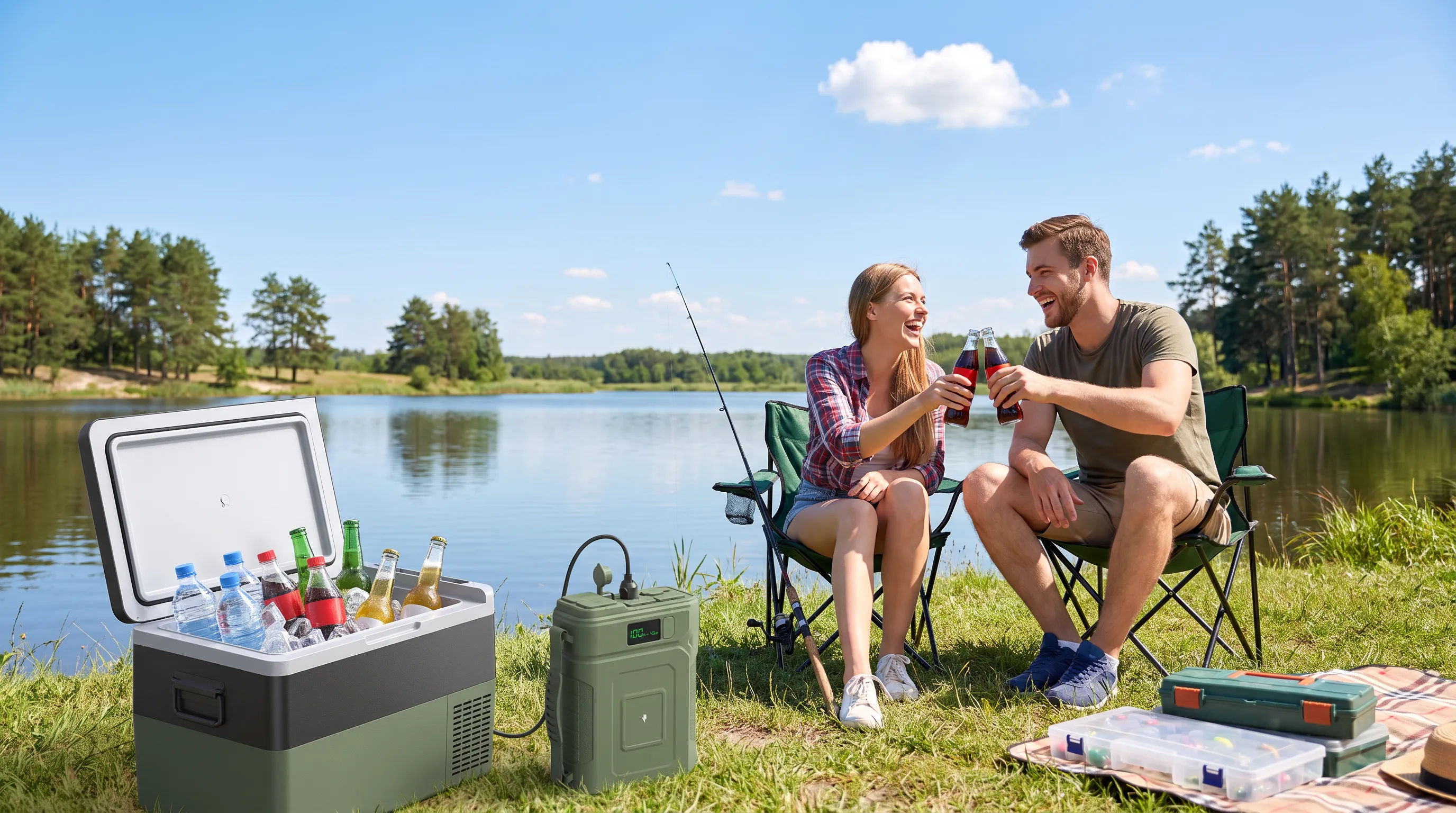
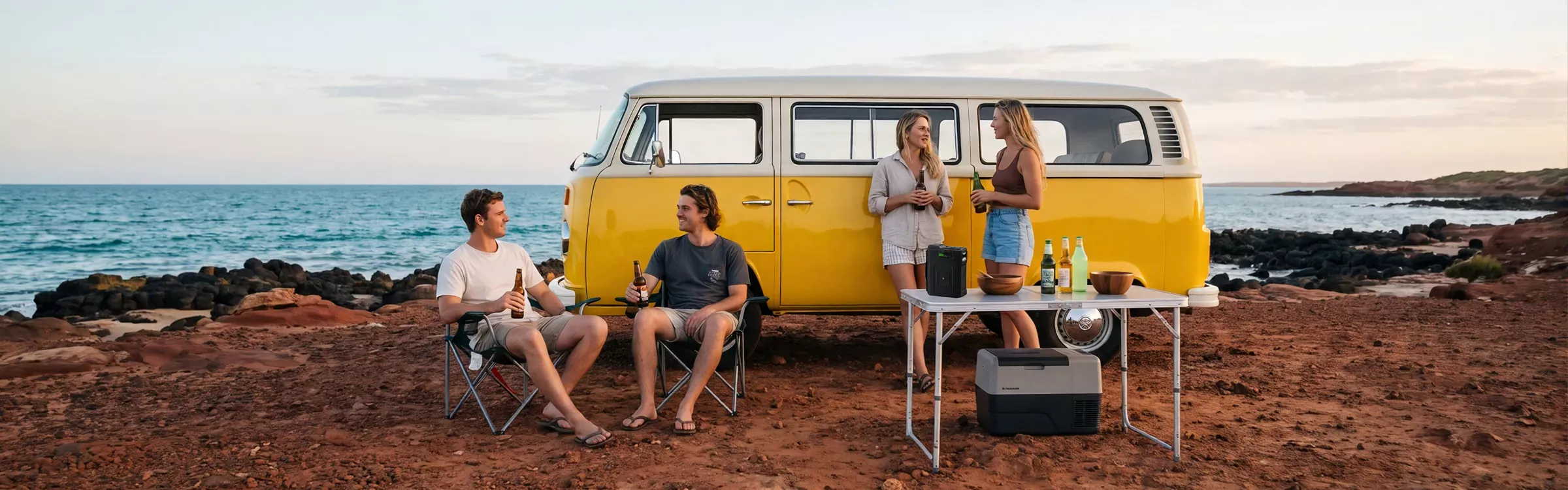
Camping is one of the few times people actively choose less noise.That is why the type of power matters just as much as the amount of power. A loud generator may technically provide energy, but it can change the entire atmosphere of camp. For many campers, especially in scenic or shared outdoor settings, the value of a power source comes from how little attention it demands.Quiet, stable portable power supports the experience instead of interrupting it.There is also a practical side to this. Stable output matters for charging modern electronics efficiently. Campers are often relying on phones, cameras, USB lighting, and similar devices that work best with consistent, appropriate power rather than makeshift charging solutions. A good camping power station should feel predictable. It should simply work when needed.That is what makes portable battery power so appealing for camping. It fits the environment rather than fighting against it.
What Makes One Camping Power Setup More Practical Than Another
Not every camping setup needs the same kind of energy support.A solo overnight camper has different needs than a family at a weekend campsite. A car camper has more flexibility than someone packing gear more tightly. A person using camp power mainly for lights and phones has a very different requirement than someone adding cooling, entertainment, and comfort accessories.That is why practical power is really about matching.A useful camping setup should be easy to carry, easy to place, easy to recharge, and easy to understand. It should handle the devices you actually use, not just impress on paper. It should also avoid creating more work than it solves.In many cases, the best setup is not the biggest one. It is the one that covers your real evening and weekend routine without wasting space or adding complexity.This is especially true for campers who want to stay flexible. A portable power station should move naturally from the car to the tent area, to the picnic table, to wherever the camp routine takes it.
How to Match Power Outputs to Real Camping Devices
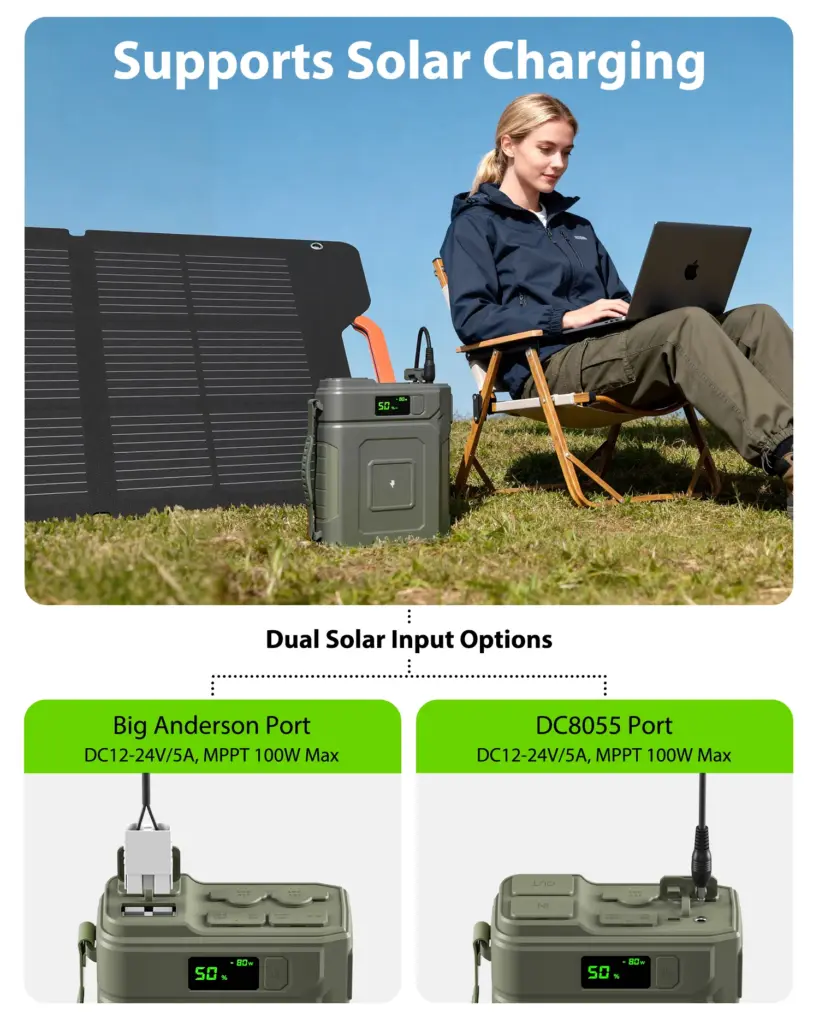
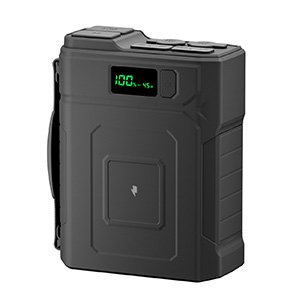
This is where a lot of buying decisions become clearer.Instead of asking how much total power a unit has, ask what you need to connect. Most camping devices fall into a few categories.Phones, tablets, and many personal devices rely on USB-C or USB-A. Small travel electronics often need only modest charging, but they benefit from having multiple ports available. Portable lighting, compact speakers, and similar accessories usually fit into the same pattern. Some campers also use vehicle-style accessories or low-voltage gear that are easier to support with a dedicated DC-style output.A good camping power station should cover these categories without forcing awkward workarounds.This is where GP45 SE fits naturally.GP45 SE is well suited to camping because it supports the kinds of outputs campers actually use. It combines dual USB-C, USB-A, a cigar lighter output, a Large Anderson output, and 15W wireless charging in one outdoor-ready portable unit. That makes it flexible enough for phones, tablets, camera accessories, camp lighting, and a variety of small travel electronics.Its 33140 LiFePO4 battery pack provides a capacity of 12.8V/30000mAh/384Wh, which is a practical size for weekend-style camping rather than a stripped-down emergency-only battery. It also supports charging flexibility through DC and Large Anderson input from 12V to 24V up to 5A, along with MPPT solar charging up to 100W. In simple terms, that means it is useful both before the trip and during it.GP45 SE also works well in camping because it is portable and suitable for outdoor environments. It is not meant to disappear into a pocket. It is meant to be part of a usable camp setup.
How to Make a Weekend Camping Battery Last Longer
A better camping power experience is usually not about carrying more electricity. It is about using it more intentionally.The first step is to fully charge the unit before leaving. That sounds obvious, but it sets the tone for the whole trip. The second step is to think in priorities. Phones, lights, and essential evening devices should come first. Convenience items can come second. The third step is to avoid leaving everything plugged in all the time just because you can.Good camping power habits usually include:
charging key devices early
using efficient lighting instead of oversized lighting setups
topping up phones and tablets before they become urgent
bringing only the electronics that improve the trip
using solar input when the campsite and weather make it practical
Because GP45 SE supports MPPT solar charging up to 100W, it can be part of a longer weekend strategy rather than a one-evening battery. That adds flexibility without making the whole camp feel technical or overbuilt.The point is not to turn camping into power management. The point is to avoid power becoming a problem.
Frequently Asked Questions
What is the most important thing to look for in a portable power station for camping?
The most important thing is whether it matches the devices you actually use. Output types, real portability, and enough usable capacity matter more than oversized headline numbers.
Is quiet operation really that important for camping?
Yes. Camping is one of the clearest examples of a use case where quiet power improves the overall experience. A noisy solution can undermine the atmosphere of the entire site.
What devices do most campers really need to charge?
Most campers focus on phones, lights, tablets, camera batteries, speakers, and a few compact comfort devices. Those loads are usually far more relevant than high-demand household appliances.
Why is GP45 SE a good fit for camping?
Because it supports real camping devices through practical outputs, offers 384Wh battery pack capacity, supports solar input, and fits naturally into a portable outdoor setup without overcomplicating the trip.
Final Thoughts
A better portable power station for camping is not defined by how extreme it sounds. It is defined by how well it fits a real camping routine.If the goal is to stay comfortable after dark, keep key devices charged, and make the weekend smoother without adding noise or clutter, then the right portable power station should feel simple and dependable.For Merpower, that is exactly where GP45 SE belongs. It supports the camping experience people actually want: quieter, more flexible, and better prepared without turning the outdoors into something overengineered.

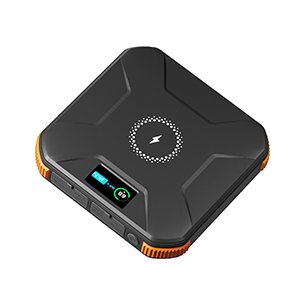
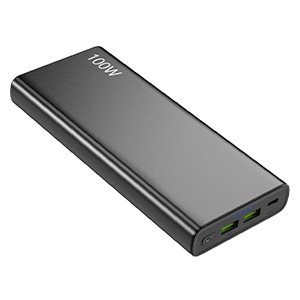
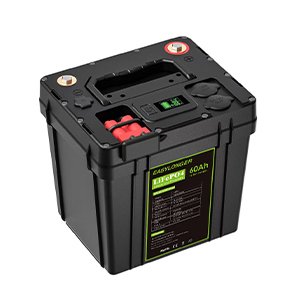
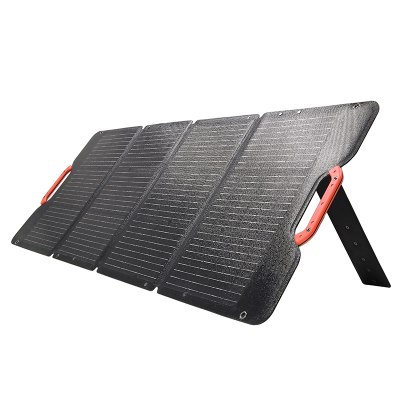

















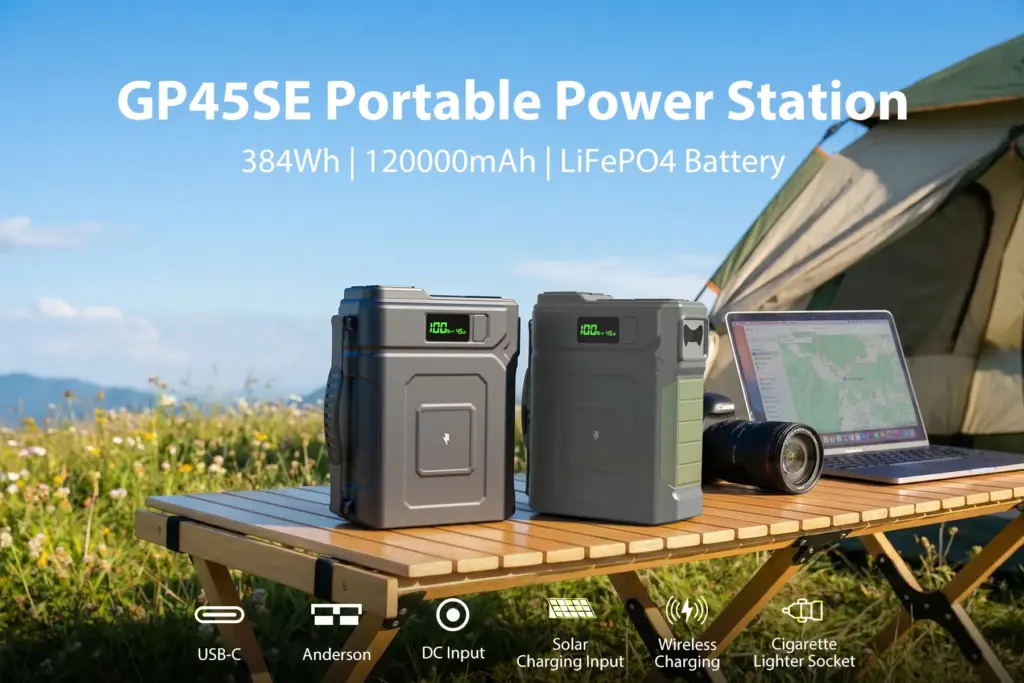 This is where a lot of buying decisions become clearer.Instead of asking how much total power a unit has, ask what you need to connect. Most camping devices fall into a few categories.Phones, tablets, and many personal devices rely on USB-C or USB-A. Small travel electronics often need only modest charging, but they benefit from having multiple ports available. Portable lighting, compact speakers, and similar accessories usually fit into the same pattern. Some campers also use vehicle-style accessories or low-voltage gear that are easier to support with a dedicated DC-style output.A good camping power station should cover these categories without forcing awkward workarounds.This is where GP45 SE fits naturally.GP45 SE is well suited to camping because it supports the kinds of outputs campers actually use. It combines dual USB-C, USB-A, a cigar lighter output, a Large Anderson output, and 15W wireless charging in one outdoor-ready portable unit. That makes it flexible enough for phones, tablets, camera accessories, camp lighting, and a variety of small travel electronics.Its 33140 LiFePO4 battery pack provides a capacity of 12.8V/30000mAh/384Wh, which is a practical size for weekend-style camping rather than a stripped-down emergency-only battery. It also supports charging flexibility through DC and Large Anderson input from 12V to 24V up to 5A, along with MPPT solar charging up to 100W. In simple terms, that means it is useful both before the trip and during it.GP45 SE also works well in camping because it is portable and suitable for outdoor environments. It is not meant to disappear into a pocket. It is meant to be part of a usable camp setup.