

















Why a DC Power Pack Makes More Sense for Modern Outdoor and Mobile Power
For a long time, portable power was often discussed in only two ways. Either people relied on small power banks for phones, or they jumped straight to large generators and oversized backup systems. That left a gap in the middle.
A DC power pack fills that gap.
It gives outdoor users, travelers, photographers, and mobile workers a quieter, simpler, and more practical way to keep essential devices running without carrying more equipment than the situation really needs. In many real-world scenarios, that makes more sense than either a tiny battery bank or a noisy fuel-powered machine.
For Merpower, this is exactly where practical portable energy becomes useful: not as a complicated system, but as a tool that matches the devices people already use.
Why More Outdoor Users Are Choosing DC-First Power
A lot of modern outdoor gear already runs on DC power.
Phones, tablets, cameras, lights, drones, routers, portable fans, and many travel accessories do not need a heavy home-style setup. They need stable low-voltage power, the right outputs, and enough capacity to stay useful throughout the day. Once people recognize that, they start asking a different question. Instead of asking how to bring household electricity outdoors, they ask how to support the devices they actually carry.
That shift explains why DC-first power is becoming more attractive.
A DC power pack is quieter, easier to carry, simpler to recharge, and often a better fit for travel or off-grid use. It matches the way people move through the day. A traveler may charge a phone in the morning, a camera battery at midday, and a light or tablet in the evening. That is a DC use pattern, not a generator use pattern.
In other words, the appeal is not just efficiency. It is relevance.
Which Everyday Devices Work Better with a DC Power Pack
Many of the devices people depend on most are already natural candidates for DC power.
Phones and tablets are the most obvious examples. They are always present, always in use, and often doing much more than communication. They handle navigation, trip planning, photography, notes, and entertainment. A reliable DC power pack keeps them ready without depending entirely on vehicle charging or wall outlets.
Cameras and camera accessories are another strong match. Photographers, content creators, and outdoor travelers often carry spare batteries, charging docks, or small lighting gear. These items do not require a large portable station to be useful. They require steady, accessible power.
Portable lights, compact fans, drones, wireless audio devices, and small travel electronics also fit naturally into a DC-based setup. Even some vehicle-style accessories make sense when a DC output is available. The important point is that these are not rare or specialized tools. They are the devices people already bring with them.
That is why a DC power pack feels practical so quickly. It supports familiar loads in a more direct way.
Where a DC Power Pack Fits Better Than a Traditional Generator
There are places where a generator still makes sense. Heavy loads, construction-style work, and large campsite demands are obvious examples. But a lot of mobile and outdoor use cases do not need that kind of power at all.
A generator brings weight, fuel, noise, and maintenance. It also changes the atmosphere of a quiet campsite, scenic stop, or mobile work area. For people who want something simple and clean, that is often too much.
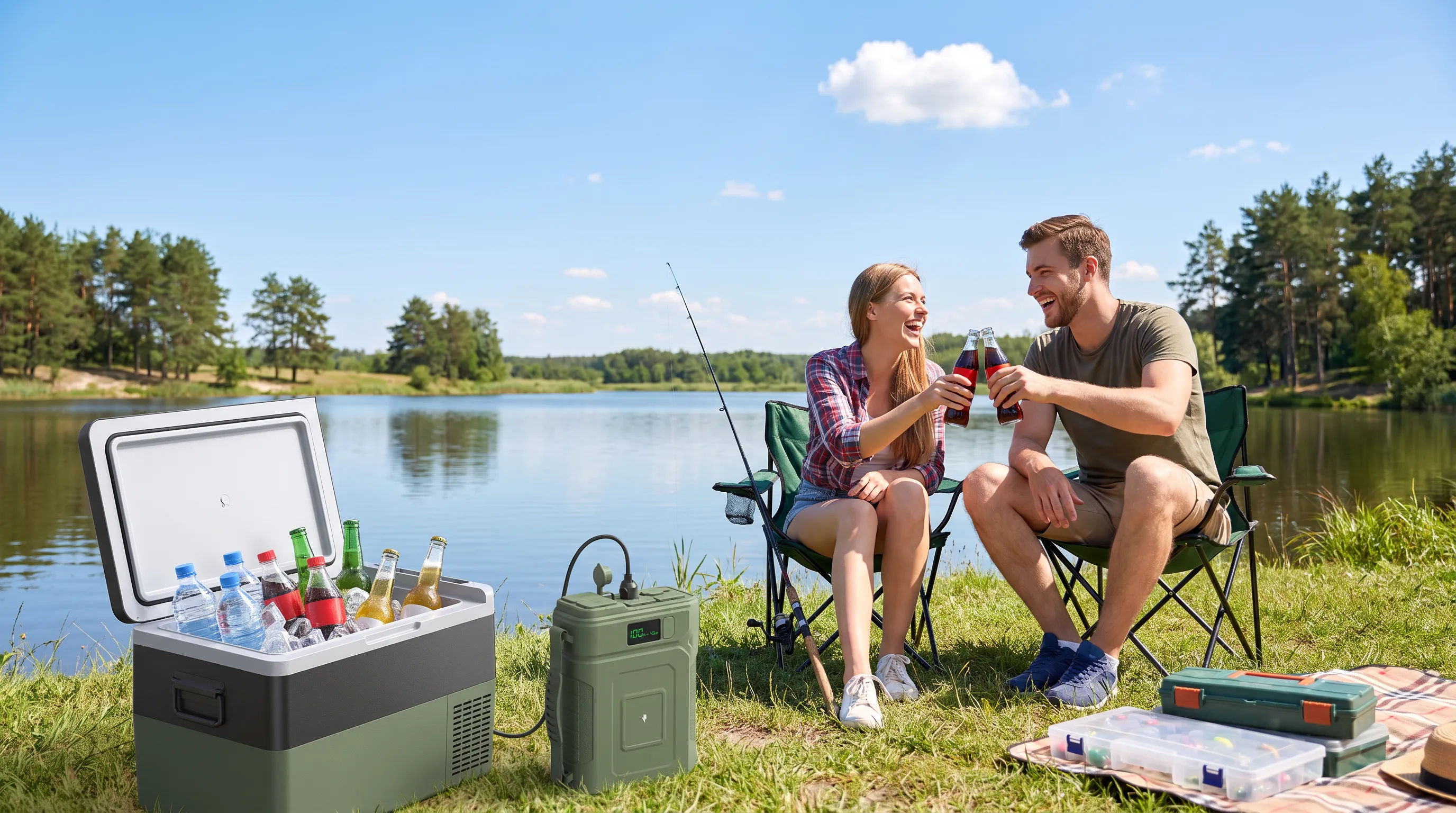
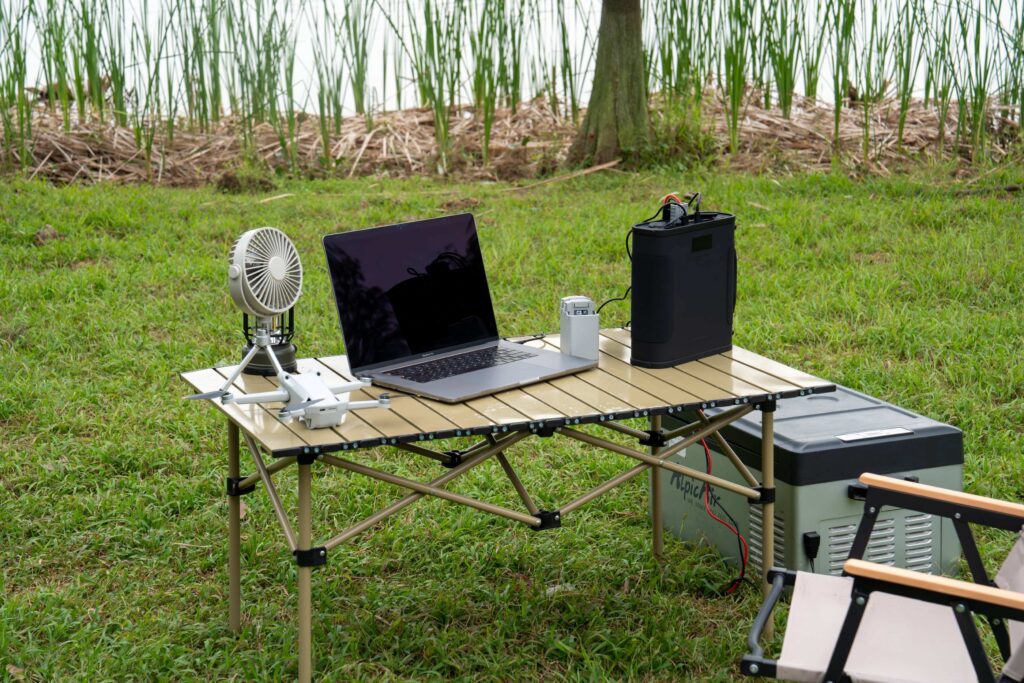
A DC power pack fits better when the goal is to stay mobile and keep only the important devices powered. Think about roadside photography, overnight camping, mobile work from the vehicle, quiet glamping setups, short off-grid getaways, or scenic day trips. In these settings, the need is usually not raw output. It is dependable support for electronics that shape the trip or the workday.
This is one reason many users stop seeing DC power as a compromise. In the right setting, it is not a smaller version of something bigger. It is simply the better match.
How to Use a DC Power Pack for Travel, Camping, and Mobile Work
The best way to use a DC power pack is to build it into the rhythm of the trip instead of treating it like backup equipment.
For travel, that means keeping it accessible in the car rather than buried in a bag. A good power pack becomes the place where phones, cameras, and tablets recharge between stops. It reduces dependence on dashboard ports and keeps the vehicle’s charging points free for other priorities.
For camping, it works best as the quiet center of a small system. Lights, phones, portable fans, and other essentials can all draw from one source. That makes the camp easier to organize and avoids the clutter of multiple smaller batteries.
For mobile work, a DC power pack helps create a stable work setup almost anywhere. A traveler can top up a laptop-compatible device, keep a phone charged, run a small light, or support a communications device without turning the whole setup into a full-scale power project.
This is where GP35 SE fits naturally.
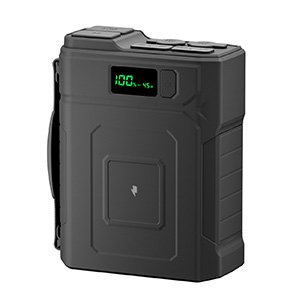
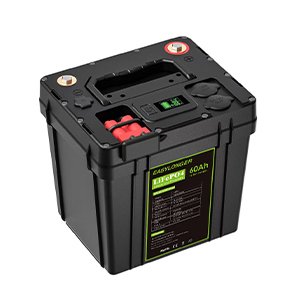
GP35 SE works well as a DC power pack because it is portable, includes a handle design, and is suitable for outdoor use. It is not a thin pocket battery. It is a more capable battery pack designed for people who need something sturdier and more useful in real-world outdoor or mobile settings. Light splashing exposure is part of that practical fit.
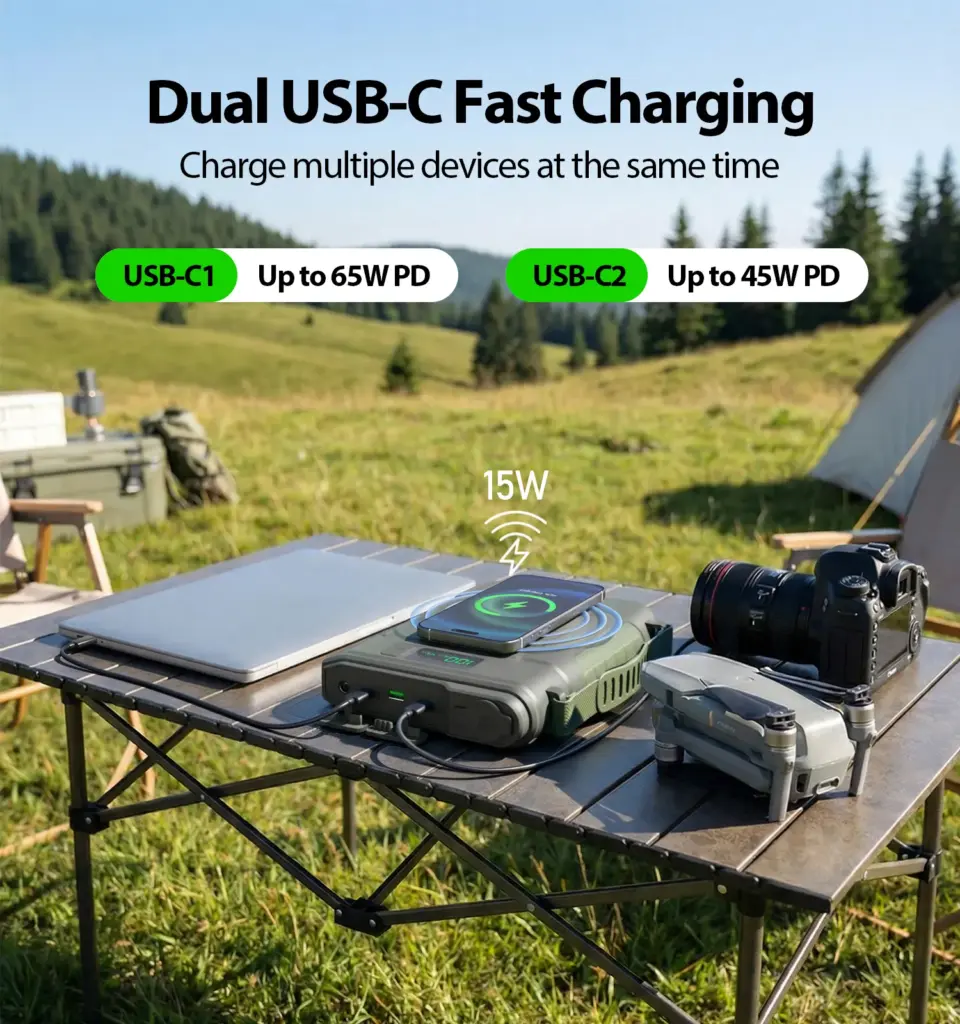
It uses a 33140 LiFePO4 battery and provides a battery pack capacity of 12.8V/15000mAh/192Wh. In practical terms, that gives users enough energy for the kinds of devices that shape a day outdoors or on the road. Its output combination is also well aligned with DC-first use. Dual USB-C outputs support modern phones, tablets, and many camera accessories. USB-A output covers smaller travel electronics. The cigar lighter output makes it more flexible for vehicle-style accessories. Wireless charging up to 15W adds convenience when a cable is not the priority.
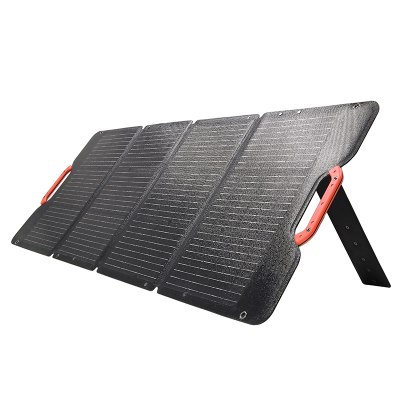
Charging flexibility also matters. GP35 SE supports DC input from 12V to 24V up to 4A and MPPT solar charging up to 80W, which makes it practical for both in-vehicle use and light off-grid solar top-up.
That combination is what makes it useful. It supports the way people actually move, stop, recharge, and continue.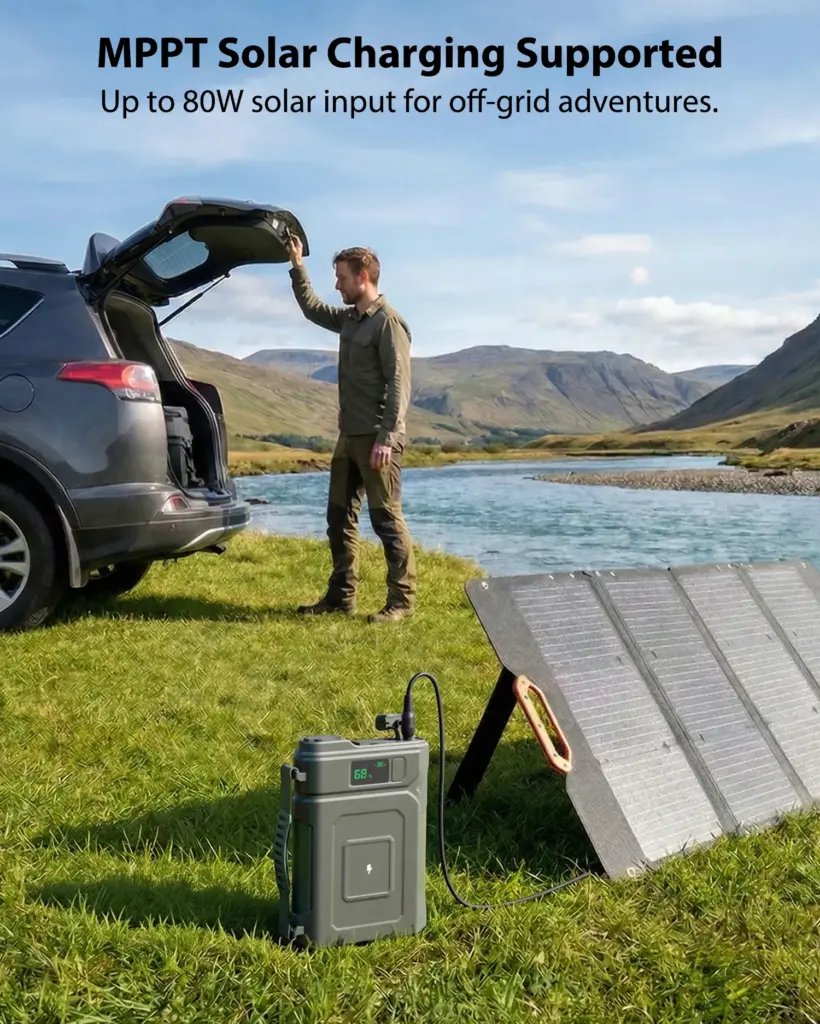
What to Look for Before Choosing a DC Power Pack
Not every portable battery should be chosen the same way.
The first thing to consider is the type of devices you really use. If most of your gear is USB-C, USB-A, lighting, and light vehicle-style accessories, then a DC power pack may be the right direction. If your needs are built around heavier appliances, then the calculation changes.
The second thing to consider is portability. A unit that is too small may be underpowered for the day. A unit that is too large may stop feeling portable enough to bring along at all. The best product is often the one that fits your actual movement pattern rather than your maximum imagined demand.
The third consideration is charging flexibility. For users who spend time in vehicles or outdoors, DC input and solar input both matter. A pack that can be recharged in more than one practical way is easier to keep in use over multiple days.
The last thing to consider is battery chemistry and overall fit for outdoor use. A DC power pack should feel dependable, not delicate. That matters more than flashy language or oversized marketing claims.
Frequently Asked Questions
What is a DC power pack best used for?
A DC power pack is best used for travel electronics, camping devices, photography accessories, mobile work gear, and other low-to-medium power items that do not need a large generator-style setup.
Is a DC power pack better than a power bank?
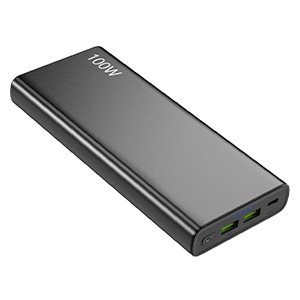
For simple phone charging, a small power bank may be enough. But for multiple devices, longer trips, and more flexible outputs, a DC power pack is often much more practical.
Can a DC power pack replace a generator?
Not in every case. Heavy-duty loads still belong to larger systems. But for many outdoor, travel, and mobile scenarios, a DC power pack is the better tool because it is quieter, cleaner, and more portable.
Why is GP35 SE a good example of a DC power pack?
Because it combines practical portability, outdoor-ready use, LiFePO4 battery chemistry, multiple output options, and flexible charging in a size that fits real travel and off-grid needs.
Final Thoughts
A DC power pack makes sense because modern portable energy needs have changed.
Most people do not need a loud machine or a full household system when they head outdoors, travel by car, or work on the move. They need reliable support for the electronics they already use every day. That is why DC-first power has become more relevant.
For Merpower, GP35 SE represents that idea well. It gives users a more practical way to stay charged, stay mobile, and stay ready without turning a simple trip into a complicated power setup.